
Il Barbiere di Siviglia (The Barber of Seville), Gioachino Rossini’s comic masterpiece, premiered at the Teatro Argentina in Rome on February 20, 1816. Based on the first play of Pierre Beaumarchais’ famous trilogy, the opera follows the clever barber Figaro as he helps Count Almaviva win the hand of the beautiful Rosina. Rossini’s vibrant score teems with sparkling arias, intricate ensembles, and irresistible energy. The opera exemplifies opera buffa at its finest—witty, fast-paced, and full of musical brilliance. Despite a rocky premiere, Il Barbiere quickly became one of the most beloved operas ever composed.
- The Origins of Barbiere
- Barbiere: from Debacle to Celebration
- Barbiere for Chamber Orchestra (17-26 players)
- Barbiere for Chamber Ensemble (12-13 players)
- Barbiere for Smaller Ensemble (7-9 players)
- Order Score & Parts of The Barber of Seville (Rossini)
The Origins of Barbiere
Rossini composed Il Barbiere di Siviglia in a mere three weeks at the age of 23. Commissioned by impresario Duke Francesco Sforza-Cesarini for the 1816 Carnival season in Rome, Rossini collaborated with librettist Cesare Sterbini to adapt Beaumarchais’ already-famous play. At the time, another opera based on the same play, Il Barbiere di Siviglia by Giovanni Paisiello, was still popular. Rossini admired Paisiello and initially considered titling his opera Almaviva, ossia l’inutile precauzione (Almaviva, or the Useless Precaution) to avoid offending the older master.
Rossini worked at astonishing speed, often borrowing from his earlier works. He famously composed the overture not for Barbiere at all—it was reused from two earlier operas (Aureliano in Palmira and Elisabetta, regina d’Inghilterra). Rossini joked: “Give me a laundress’ bill and I will set it to music.” He was often seen sleeping backstage with the score resting on his chest. Despite the haste, the opera exhibits perfect structural balance, lightning-quick wit, and rhythmic vitality. Rome’s musical circles buzzed with anticipation as Rossini delivered what would become a landmark of comic opera and a central work in the Italian operatic canon.
Barbiere: from Debacle to Celebration
The premiere of Il Barbiere di Siviglia on February 20, 1816, was a debacle. The audience, loyal to Paisiello’s earlier version, hissed and booed throughout the evening. A series of onstage mishaps contributed to the disaster: the tenor tripped over a trapdoor, a cat wandered on stage, and musicians struggled with the complex score. Rossini reportedly stayed home the following day, too embarrassed to face the public. However, the second performance received a wildly different reception—audiences applauded Rossini’s brilliant music, and the opera began its ascent to international fame.
Over time, Il Barbiere di Siviglia became celebrated as one of the greatest operas ever written. Richard Wagner, no friend of Italian opera, still praised it as “a model of opera buffa.” Stendhal wrote that the music “moves with the speed of thought.” The aria “Largo al factotum,” with its rapid-fire “Figaro! Figaro! Figaro!” became instantly iconic. By the late 19th century, Barbiere was a mainstay in every major opera house, from Paris to Buenos Aires. Its universal appeal—effervescent music, relatable characters, and comic genius—ensured its lasting success. Today, it is one of the most frequently performed operas worldwide and a joyous celebration of Rossini’s youthful brilliance.
Barbiere for Chamber Orchestra (17-26 players)
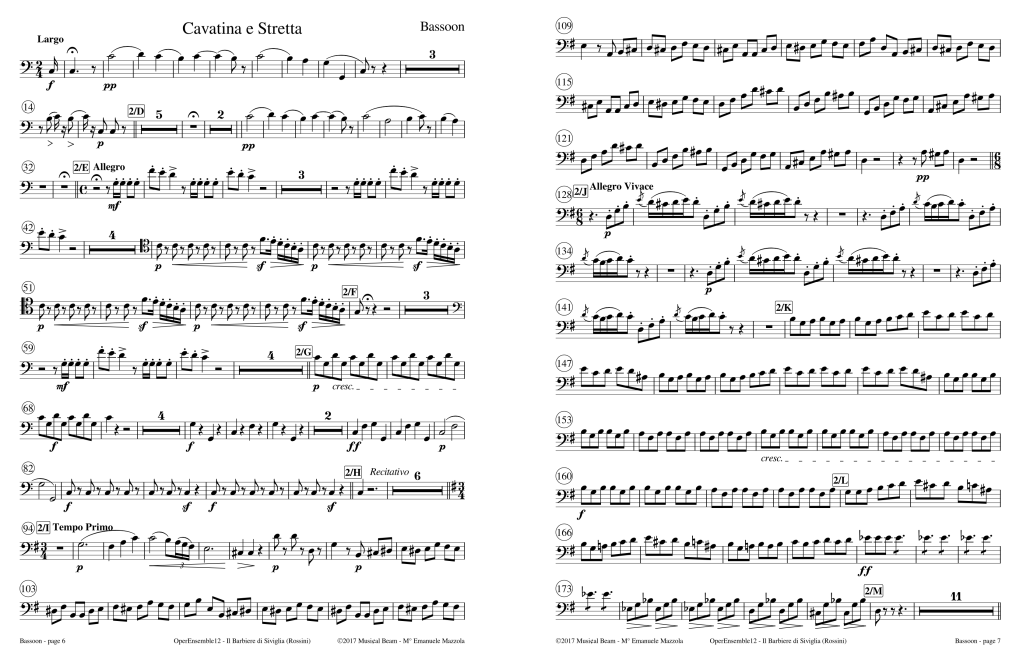
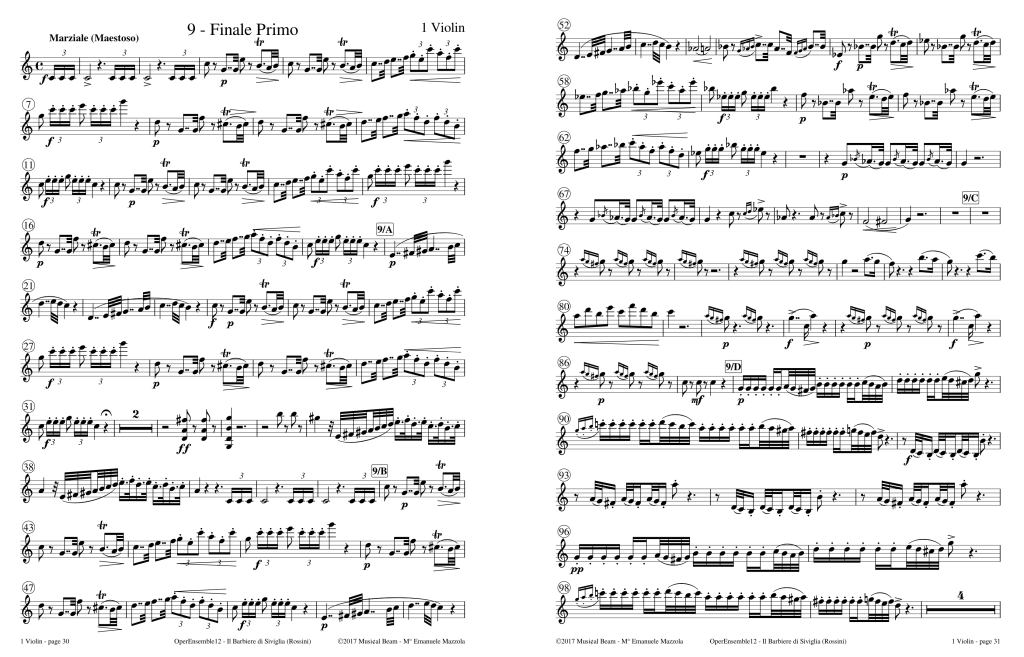
Rossini scored Il Barbiere di Siviglia for a Classical-era orchestra: strings, pairs of woodwinds, horns, trumpets, timpani, and continuo (typically harpsichord or fortepiano). The orchestra typically consists of 35–40 players. The opera adapts well to smaller forces, with many chamber versions successfully capturing its sparkle and precision. The Barber of Seville for Chamber Orchestra requires:
- Flute with piccolo, oboe, clarinet, bassoon
- (French) Horn, trumpet
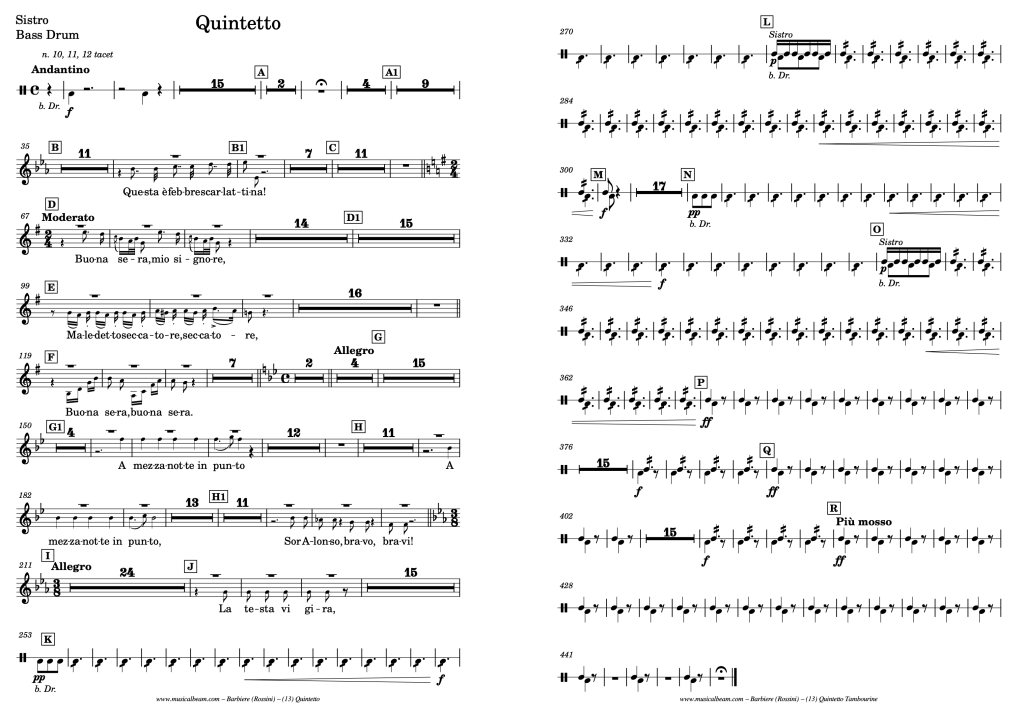
- 1 percussionist with bass drum sistro and optional timpani
- String orchestra (10-18 players):
- 3-6 first violins
- 3-6 second violins
- 2-3 violas
- 1-2 cellos
- 1 bass
- Continuo (conductor)


Barbiere for Chamber Ensemble (12-13 players)
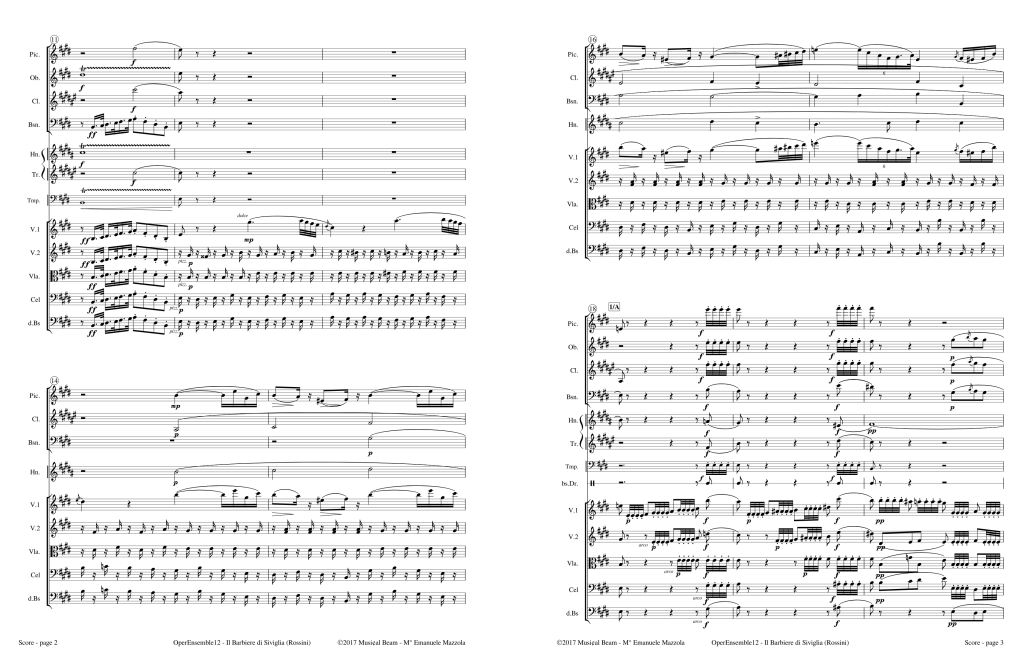
With only one player per string part, careful attention must be given to sound balance. Unlike the Chamber Orchestra version, which includes a fuller string section, the reduced string forces can be easily overpowered by winds or percussion. We recommend subtle amplification of the strings where possible, or alternatively, strategic dynamic adjustments—such as reducing wind and percussion volume—to maintain clarity and ensemble blend. The Barber of Seville for Chamber Ensemble requires:
- Flute with piccolo, oboe, clarinet, bassoon
- (French) Horn, trumpet
- 1 percussionist with bass drum sistro and optional timpani
- String quintet (1.1.1.1.1)
- Continuo (conductor)
Open12 Edition
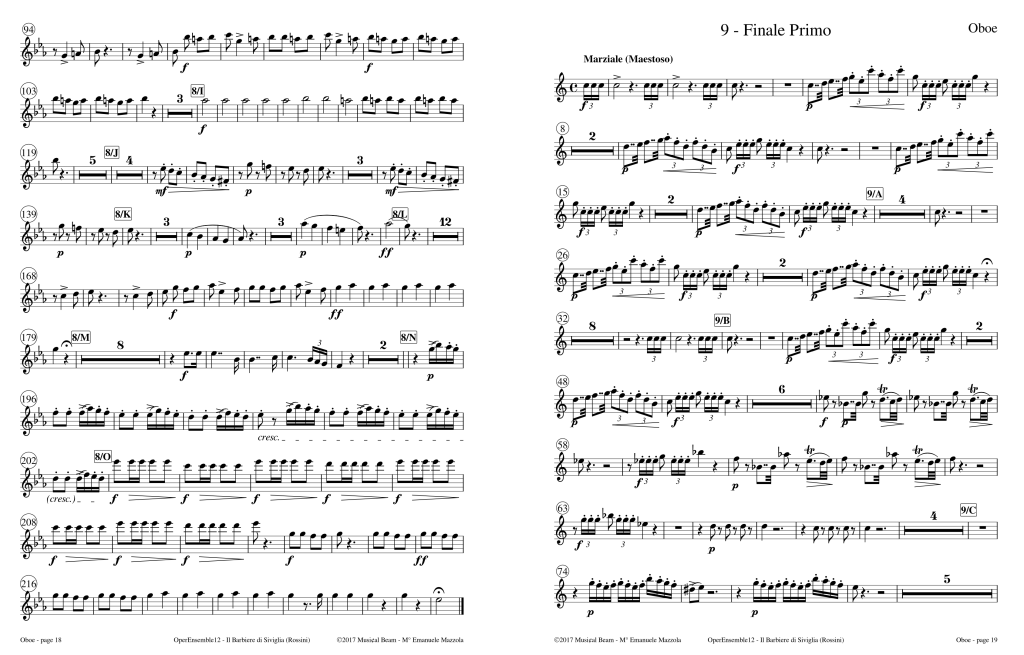
Open12 Editions are similar to the newer Chamber Ensemble versions.. The upgrade includes more options and higher printing standards, including cues in multi-rests and larger fonts. The Open12 Edition of Barbiere di Siviglia will remain available until the Chamber Ensemble version is issued.



Barbiere for Smaller Ensemble (7-9 players)
The Smaller Ensemble version is designed for maximum reduction without compromising musical integrity. It features a string quartet, three woodwinds, and piano. The piano part is not a vocal score, but a fully notated performance part, often playable with one hand, intended for the conductor or a designated player. It reinforces the ensemble in forte and fortissimo sections, ensuring depth and rhythmic clarity. With its balanced orchestration across winds, strings, and keyboard percussion, this version requires no special adjustments and offers a complete and practical solution for venues with limited resources or space. The Barber of Seville for Smaller Ensemble is under preparation and will require:
- Flute, oboe, clarinet
- String quartet with optional bass
- Piano or keyboard (conductor)


 Musical Beam