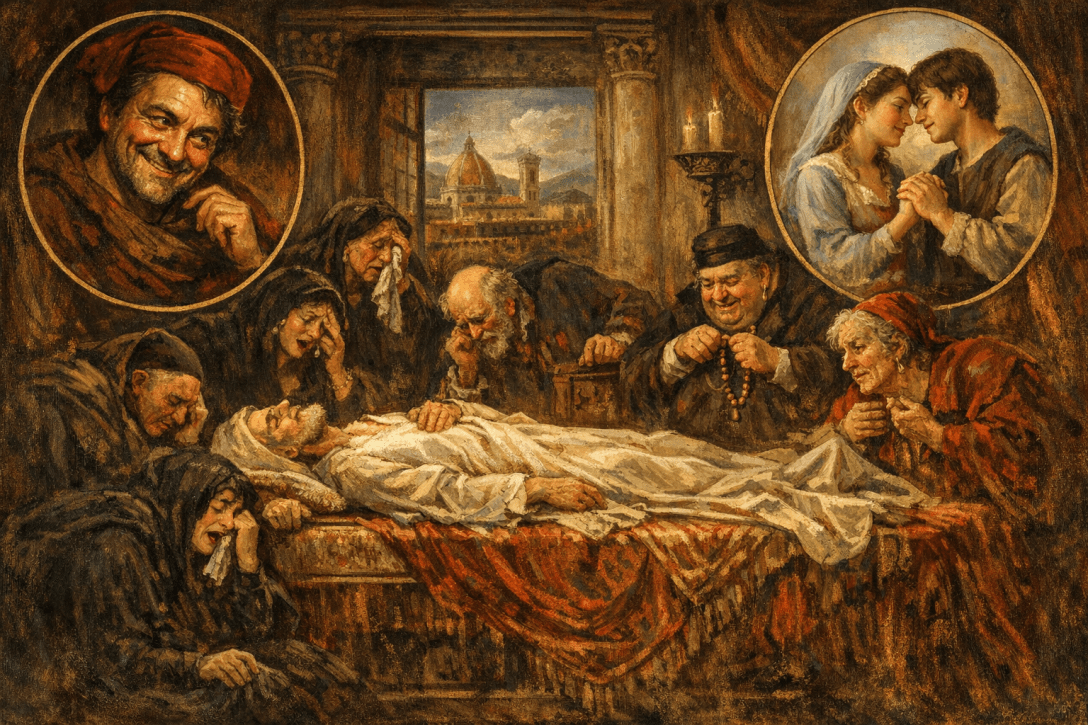
Gianni Schicchi, the only comic opera by Giacomo Puccini, is based on a brief episode from Dante’s Inferno. The opera, written as the final installment of Puccini’s triptych Il Trittico, tells the story of a cunning Florentine commoner who outwits greedy aristocrats to secure a future for his daughter. Despite its brevity—under an hour—Gianni Schicchi combines razor-sharp wit with emotional poignancy, particularly in the beloved aria “O mio babbino caro.” It remains a gem of 20th-century opera and a favorite with audiences.
- The Origins of Gianni Schicchi
- Gianni Schicchi: Overwhelming Energy
- Schicchi for Chamber Orchestra (18-28 players)
- Schicchi for Chamber Ensemble (13-15 players)
- Gianni Schicchi for Smaller Ensemble (7-9 players)
- Order score and parts of Gianni Schicchi (Puccini)
The Origins of Gianni Schicchi
Puccini began work on Gianni Schicchi in 1917, intending it as the comedic counterweight to the tragic Il Tabarro and mystical Suor Angelica, which together would form Il Trittico. The idea of adapting an episode from Dante’s Divine Comedy—specifically from Inferno, Canto XXX—was suggested by librettist Giovacchino Forzano, who also collaborated with Puccini on Suor Angelica. Puccini was instantly captivated by the potential for satire and Florentine color: “I laughed while writing it,” he confessed. He spent the summer of 1917 at his villa in Torre del Lago, where the Tuscan atmosphere helped bring authenticity to the music and dialect.
Forzano constructed a libretto rich in vernacular humor, while Puccini drew on local musical idioms and created a score with dazzling ensemble writing and compact character sketches. Despite the turmoil of World War I and the recent death of Puccini’s close friend Giulio Ricordi, the composer worked with remarkable speed and good spirits. As Puccini remarked, “The music came like laughter on a sunny day.” In Gianni Schicchi, he found a rare chance to showcase his comic instincts, writing with clarity, speed, and biting irony. The Florence he recreated was both nostalgic and mercilessly sharp—a city he loved and skewered at once.
Gianni Schicchi: Overwhelming Energy
Gianni Schicchi premiered on December 14, 1918, at the Metropolitan Opera, New York. It was the first full performance of Il Trittico, but Gianni Schicchi quickly stole the spotlight. Critics and audiences hailed its wit, musical sparkle, and energy. The New York Times wrote, “The audience rocked with laughter—the most spontaneous Puccini has given us.” While Il Tabarro and Suor Angelica received more muted reactions, Gianni Schicchi was immediately embraced and often performed independently.
Puccini had reservations: “Trittico is one—cutting it would be like amputating a limb.” But practicalities won out, and Gianni Schicchi took on a life of its own. Within a year, it was staged in London, Milan, and Vienna. Arturo Toscanini praised its orchestration and pace: “A jewel—brilliant and precise.” Audiences adored the aria “O mio babbino caro,” which became a staple of soprano repertoire, sometimes overshadowing the rest of the opera. Its popularity transcended the stage, featuring in films and recitals. Today, Gianni Schicchi stands as Puccini’s most successful comedic work—still performed on its own or as part of Trittico—cherished for its vibrant satire and musical finesse.
Schicchi for Chamber Orchestra (18-28 players)
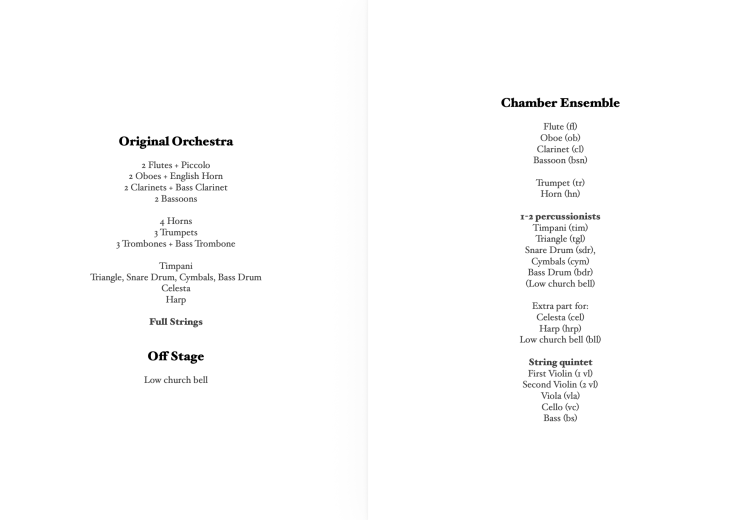
Puccini scored Gianni Schicchi for a large orchestra: full strings, woodwinds in pairs, horns, trumpets, trombones, tuba, harp, celesta, and percussion. While the full orchestra includes around 60 players, the one-act structure and chamber-like ensemble writing allow for reduced orchestrations, commonly used in smaller opera houses. The compact form and tight dramatic pacing make Gianni Schicchi an ideal opera for touring productions, student performances, or comedic interludes in a mixed bill. Schicchi for Chamber Orchestra is under preparation and will require:
- Flute with piccolo, oboe, clarinet, bassoon
- (French) Horn, trumpet
- Optional trombone
- 1-2 percussionists: timpani, triangle, snare & bass drum, cymbals, low bell
- A keyboard for celesta, harp (and low bell)
- String orchestra (10-18 players):
- 3-6 first violins
- 3-6 second violins
- 2-3 violas
- 1-2 cellos
- 1 bass
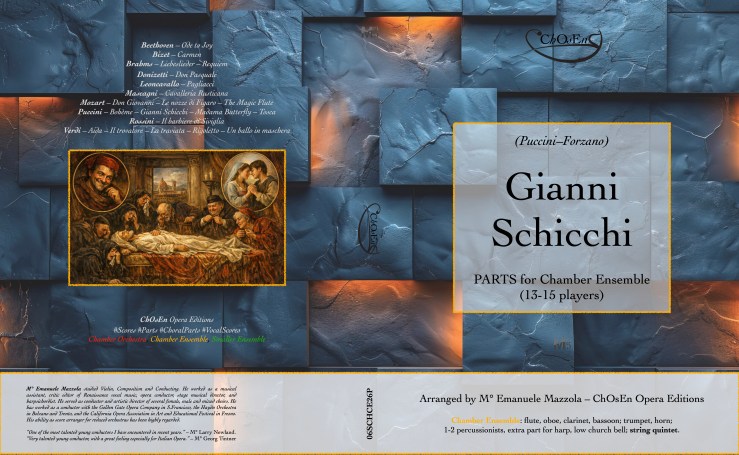
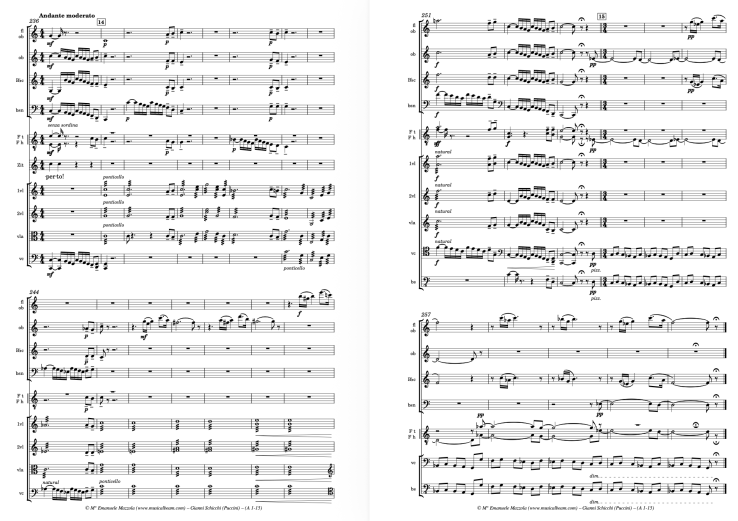
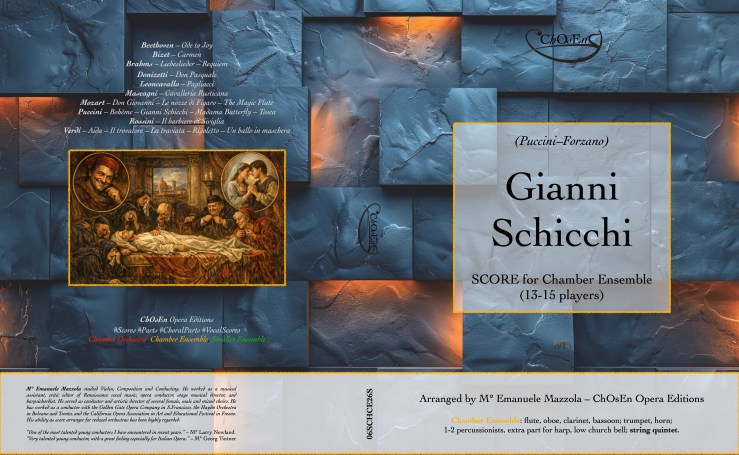
Schicchi for Chamber Ensemble (13-15 players)
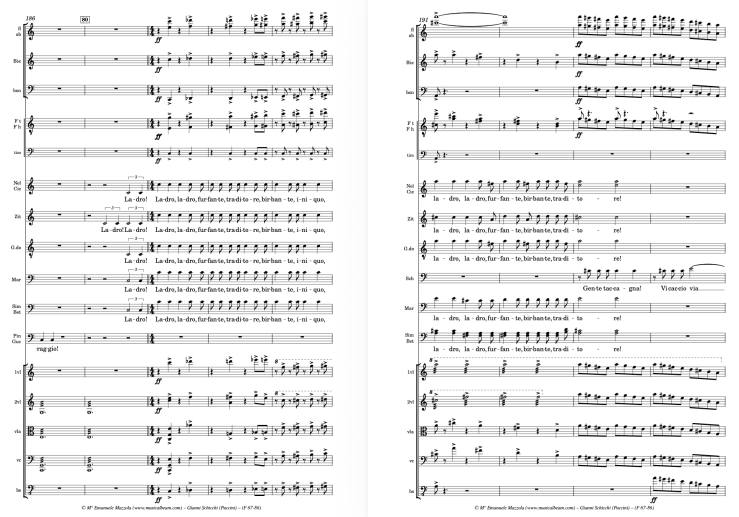
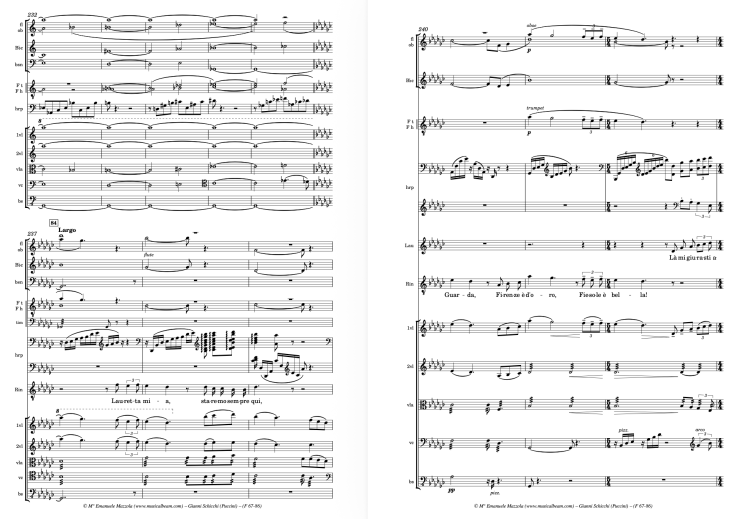
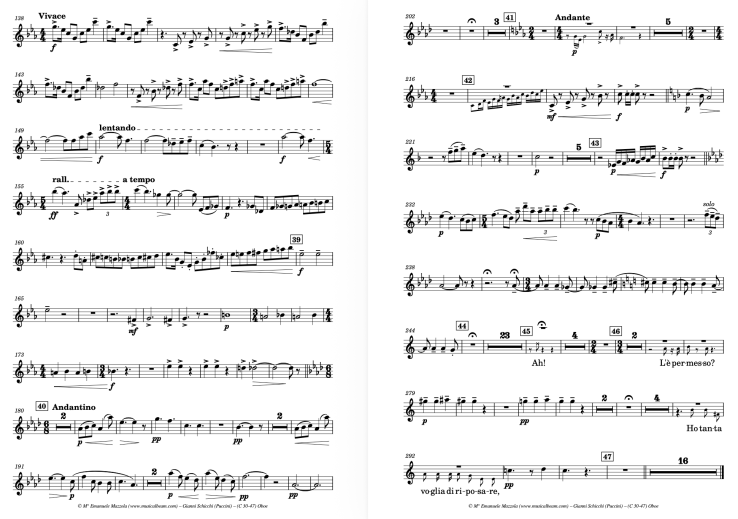
With only one player per string part, careful attention must be given to sound balance. Unlike the Chamber Orchestra version, which includes a fuller string section, the reduced string forces can be easily overpowered by winds or percussion. We recommend subtle amplification of the strings where possible, or alternatively, strategic dynamic adjustments—such as reducing wind and percussion volume—to maintain clarity and ensemble blend. Gianni Schicchi for Chamber Ensemble requires:
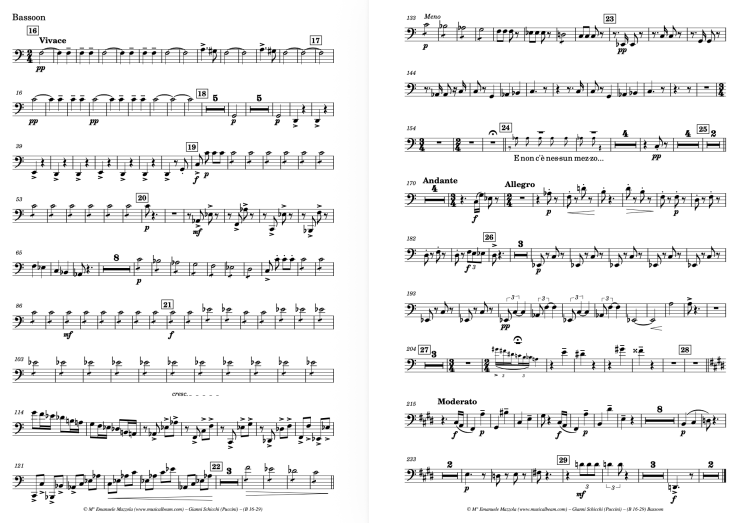
- Flute with piccolo, oboe, clarinet, bassoon
- Trumpet, horn
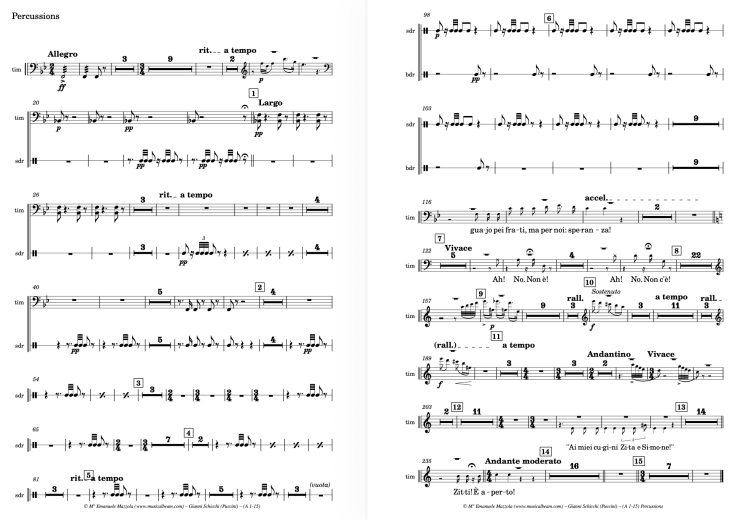
- 1-2 percussionists: timpani, triangle, snare & bass drum, cymbals, low bell
- A keyboard for celesta, harp (and low bell)
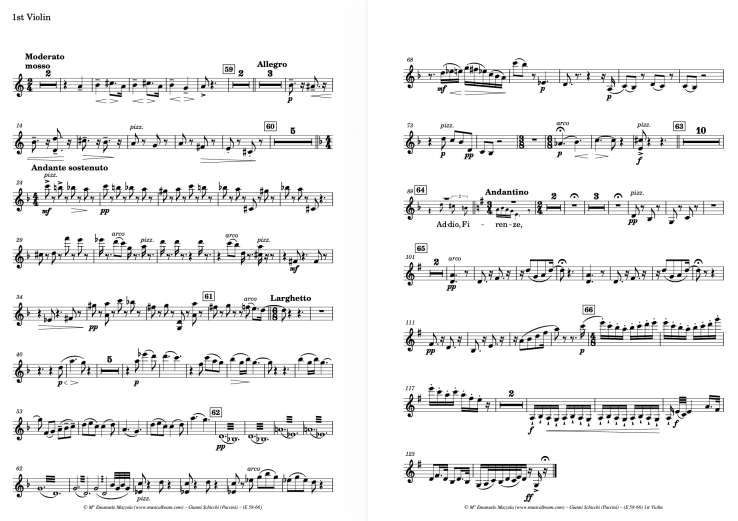
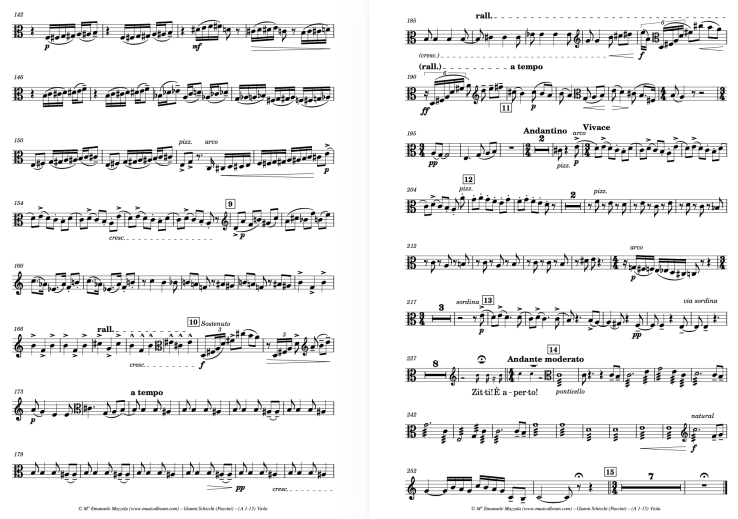
- String quintet (1.1.1.1.1)
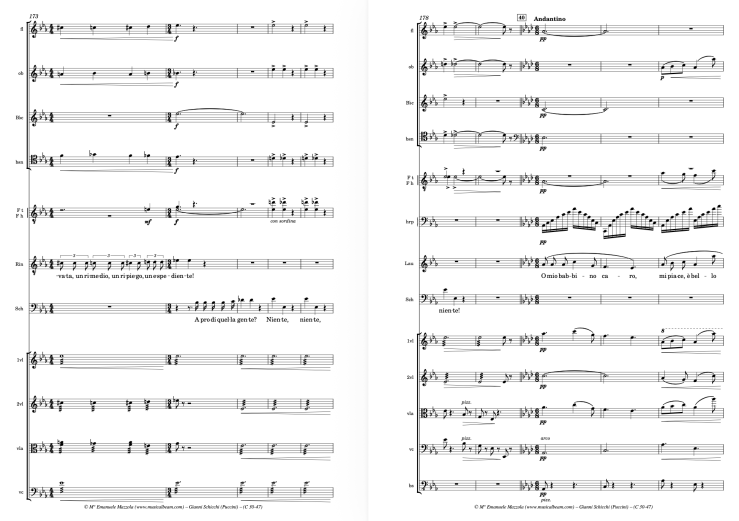
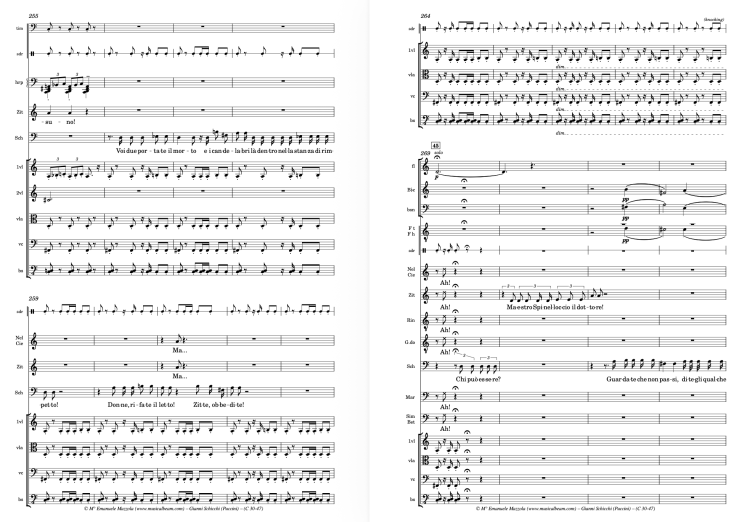
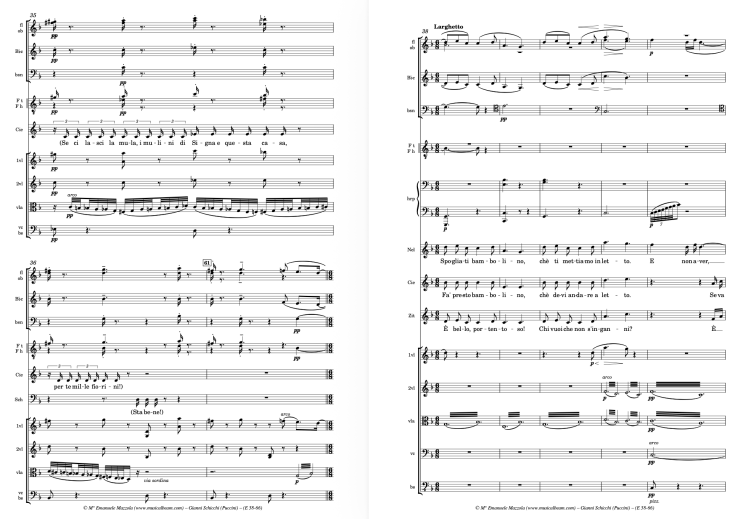
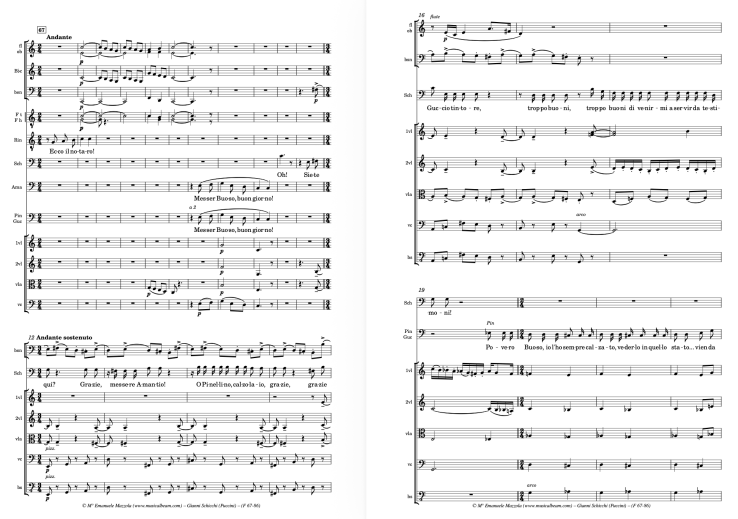
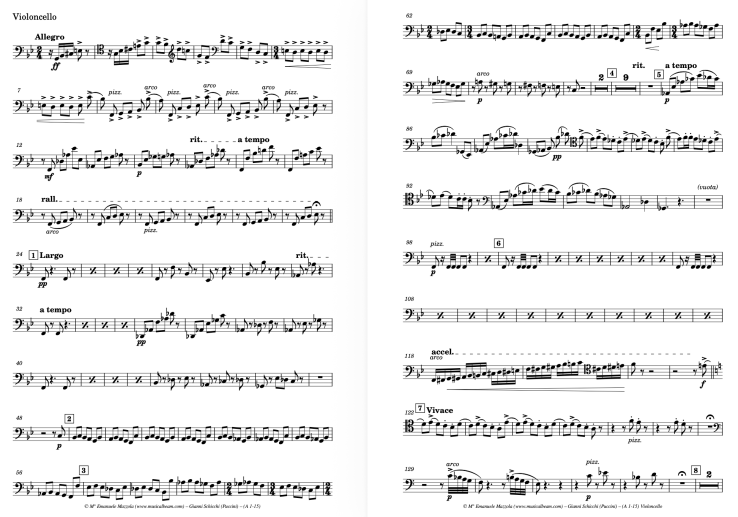
Gianni Schicchi for Smaller Ensemble (7-9 players)
The Smaller Ensemble version is designed for maximum reduction without compromising musical integrity. It features a string quartet, three woodwinds, and piano. The piano part is not a vocal score, but a fully notated performance part, often playable with one hand, intended for the conductor or a designated player. It reinforces the ensemble in forte and fortissimo sections, ensuring depth and rhythmic clarity. With its balanced orchestration across winds, strings, and keyboard percussion, this version requires no special adjustments and offers a complete and practical solution for venues with limited resources or space. Schicchi for Smaller Ensemble is under preparation and will require:
- Flute, oboe, clarinet
- String quartet with optional bass
- Piano or keyboard (conductor)


 Musical Beam