
The Marriage of Figaro
Le Nozze di Figaro premiered on May 1, 1786, at the Burgtheater in Vienna. Based on Pierre Beaumarchais’ play La Folle Journée, the opera unfolds over a single day of comic intrigues, mistaken identities, and social subversion within an aristocratic household. Mozart’s music illuminates the characters’ inner lives with extraordinary psychological insight and grace. Blending humor with humanism, the opera critiques class privilege and celebrates the resilience of love and wit. Today, it remains one of the most frequently performed operas in the world.
- The Origins of Mozart’s Figaro
- Figaro: Too Beautiful for Our Ears
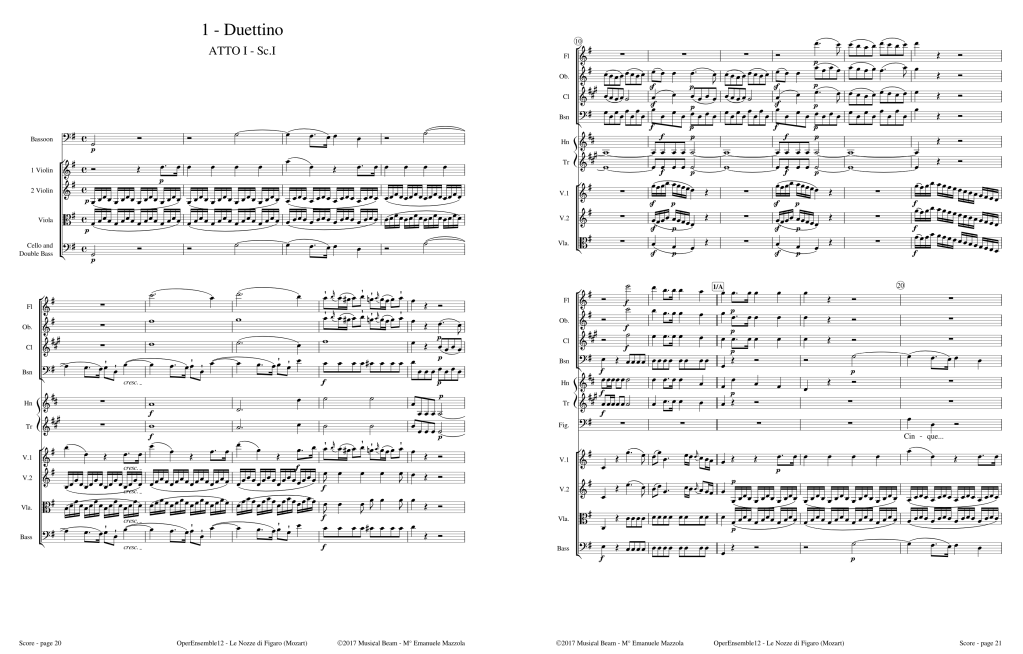
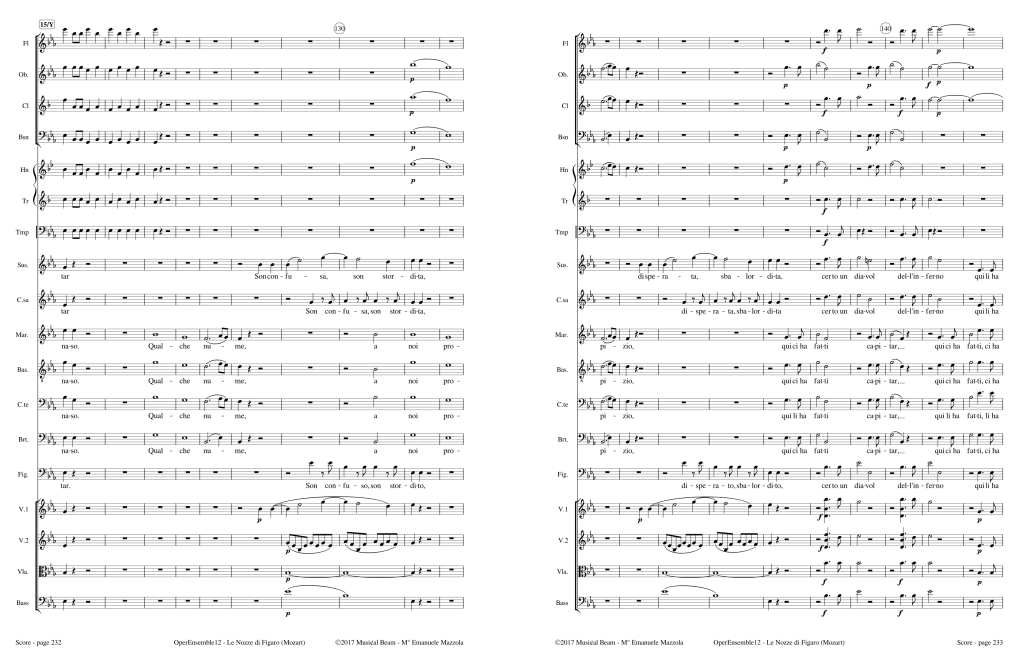
- Figaro for Chamber Orchestra (15-26 players)
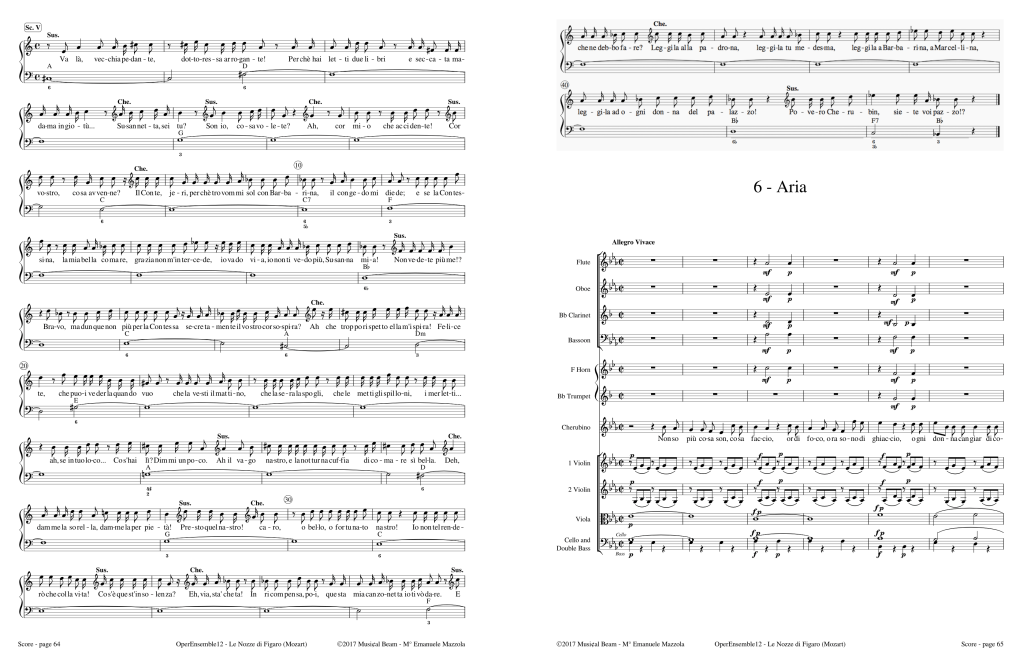
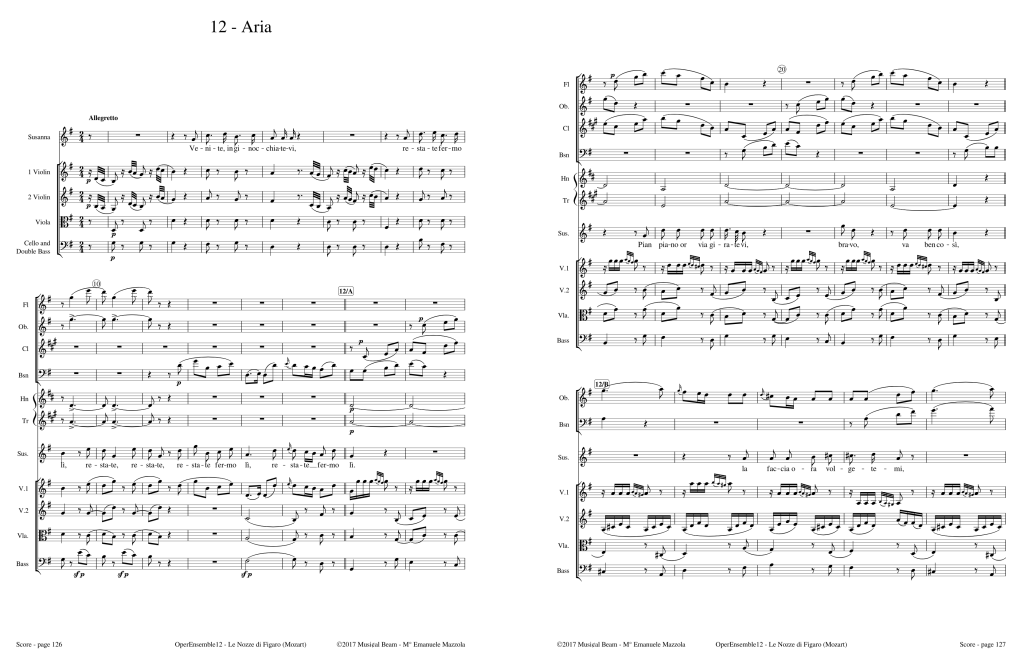
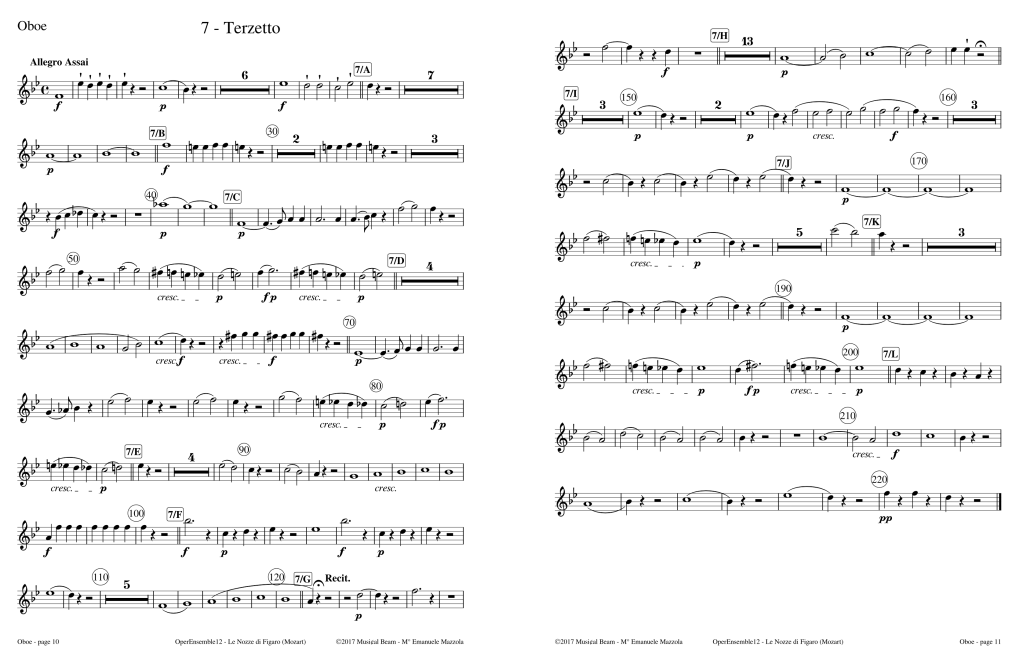
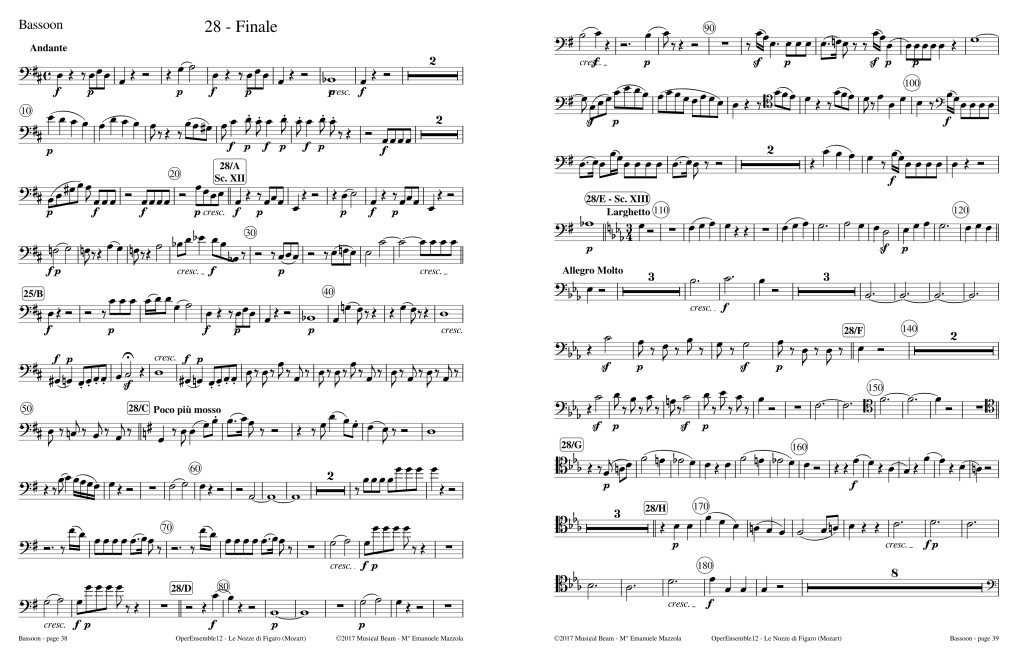
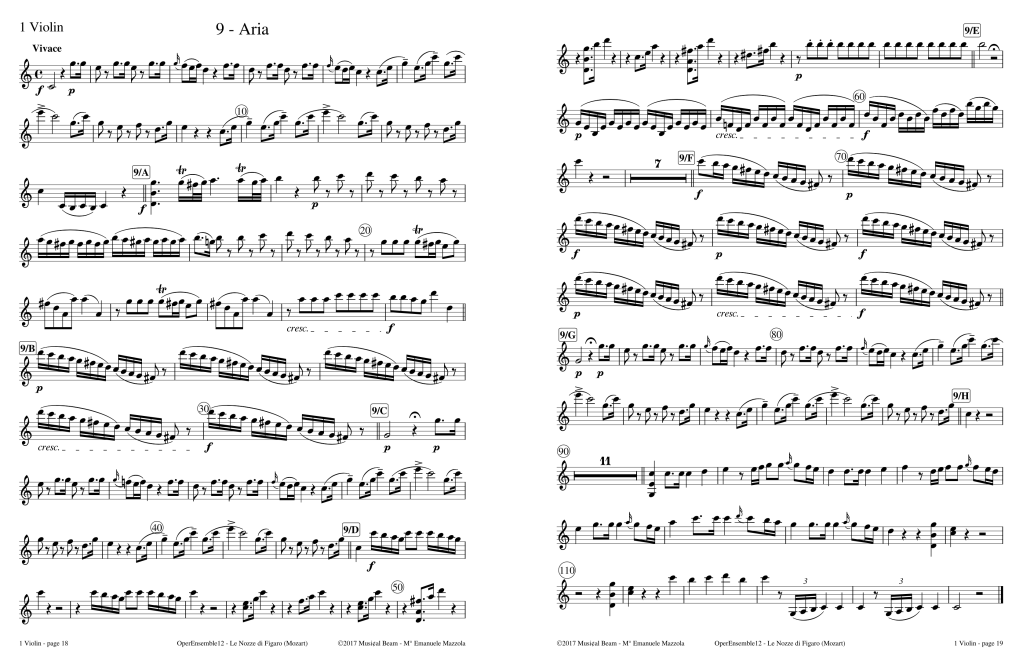
- Figaro for Chamber Ensemble (10-13 players)
- Figaro for Smaller Ensemble (7-9 players)
- Order score and parts of Figaro (Mozart)
The Origins of Mozart’s Figaro
Mozart began composing Le Nozze di Figaro in 1785, eager to create a new opera for Vienna. He collaborated with librettist Lorenzo Da Ponte, who skillfully adapted Beaumarchais’ controversial play, banned in many cities for its critique of aristocracy. Mozart wrote enthusiastically to his father: “I assure you that this Figaro will be a completely different type of opera than you have known.” He worked feverishly at his home on Domgasse in Vienna, often visited by friends such as Joseph Haydn. The Enlightenment ideals sweeping Europe inspired both Mozart and Da Ponte to emphasize the opera’s humanist themes.
Emperor Joseph II, an admirer of Mozart, approved the project but insisted on omitting certain politically sensitive passages. The resulting opera retained its revolutionary spirit through music: arias and ensembles convey complex emotions and social commentary with wit and elegance. Mozart’s wife, Constanze, recalled the joy and intensity of this period: “He scarcely left his desk, laughing one moment, serious the next.” The cultural vibrancy of 1780s Vienna, with its salons and imperial patronage, fostered this masterpiece. The overture and arias like “Non più andrai” and “Voi che sapete” soon captivated all who heard them.
Figaro: Too Beautiful for Our Ears
Le Nozze di Figaro’s premiere on May 1, 1786, was a resounding success. The Viennese audience demanded multiple encores, though Emperor Joseph II famously remarked: “Too beautiful for our ears, my dear Mozart, and an awful lot of notes.” The opera’s brilliance was quickly recognized by critics and musicians. Lorenzo Da Ponte later wrote: “Never was there a greater triumph.” However, certain conservative factions within the court, wary of the opera’s subversive themes, limited the number of performances in Vienna. Mozart’s friends, including Haydn, praised the work for its unprecedented integration of music and drama.
Within months, the opera was performed in Prague, where it achieved even greater acclaim. Mozart reported: “Here they talk of nothing but Figaro.” In Prague, the public’s rapturous reception led to commissions for Don Giovanni. Over time, Le Nozze di Figaro established itself as a cornerstone of operatic repertoire, admired for its psychological depth, musical invention, and sparkling ensemble writing. Johannes Brahms later observed: “In my opinion, each number in Figaro is a miracle.” Its continued popularity attests to Mozart’s genius in marrying the spirit of the Enlightenment with the timeless allure of human comedy.
Figaro for Chamber Orchestra (15-26 players)
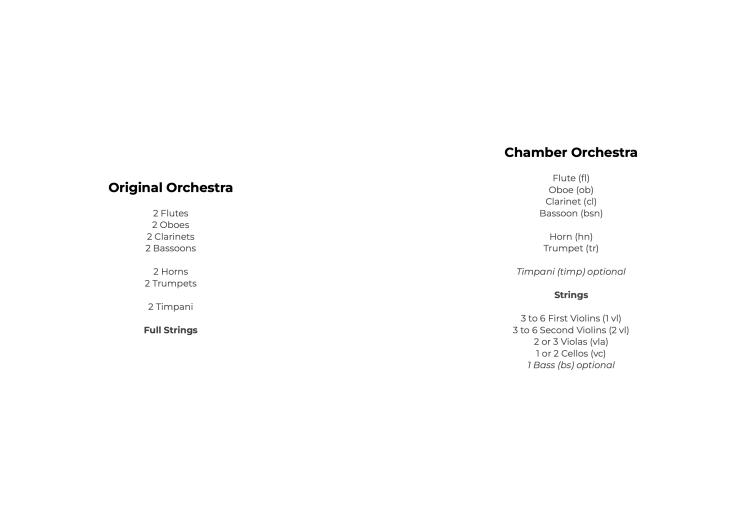
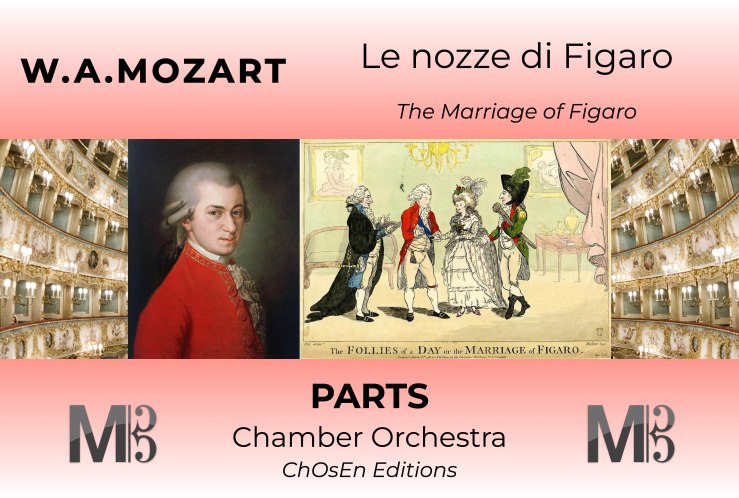
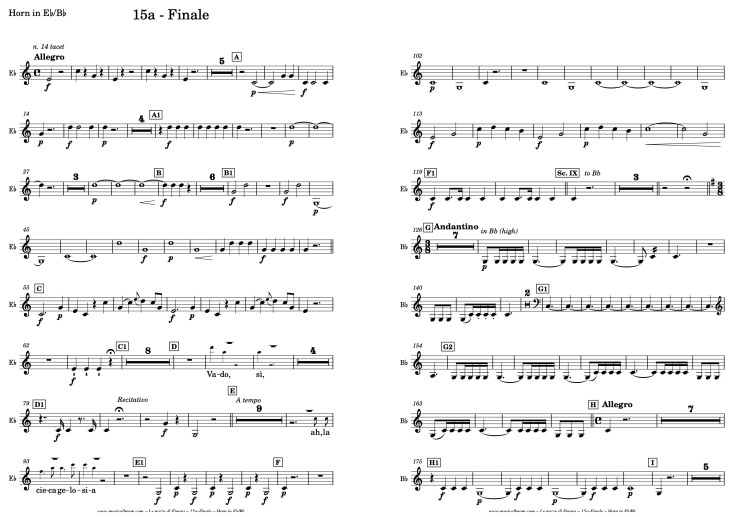
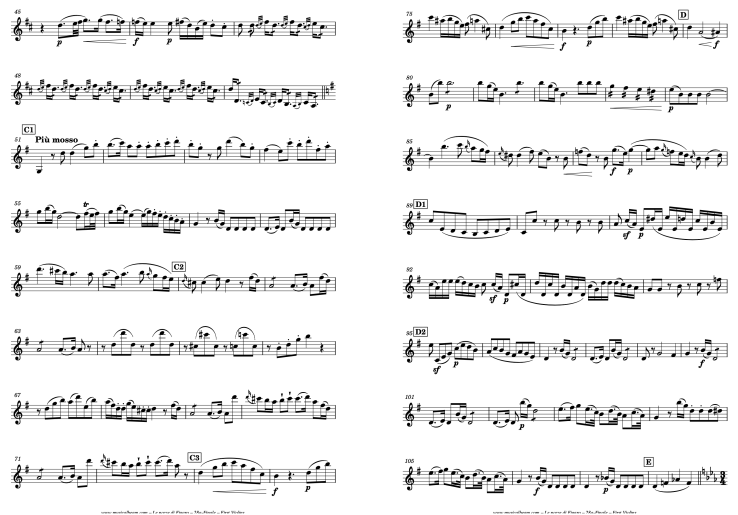
Mozart scored Le Nozze di Figaro for a Classical orchestra: strings, pairs of woodwinds, horns, trumpets, timpani, and continuo (harpsichord or fortepiano). The orchestral forces are modest (about 35 players), making the opera well-suited to intimate theaters or chamber reductions. While modern productions sometimes use larger orchestras, the opera’s transparency and elegance shine in leaner interpretations faithful to Mozart’s original conception. Figaro for Chamber Orchestra requires:
- Flute, oboe, clarinet, bassoon
- (French) Horn, trumpet
- Optional timpani
- String orchestra (9-18 players):
- 3-6 first violins
- 3-6 second violins
- 2-3 violas
- 1-2 cellos
- Optional bass
- Continuo (conductor)



Figaro for Chamber Ensemble (10-13 players)
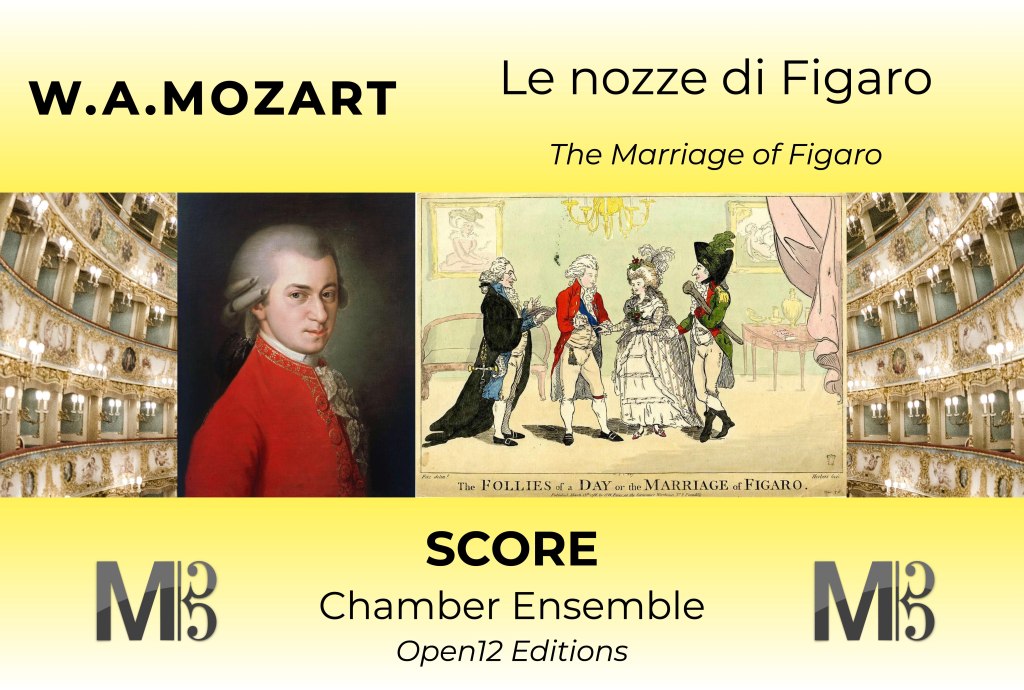
With only one player per string part, careful attention must be given to sound balance. Unlike the Chamber Orchestra version, which includes a fuller string section, the reduced string forces can be easily overpowered by winds or percussion. We recommend subtle amplification of the strings where possible, or alternatively, strategic dynamic adjustments—such as reducing wind and percussion volume—to maintain clarity and ensemble blend. Figaro for Chamber Ensemble requires:
- Flute, oboe, clarinet, bassoon
- (French) Horn, trumpet
- Optional timpani
- String quartet with optional bass (1.1.1.1.1)
- Continuo (conductor)


Figaro for Smaller Ensemble (7-9 players)
The Smaller Ensemble version is designed for maximum reduction without compromising musical integrity. It features a string quartet, three woodwinds, and piano. The piano part is not a vocal score, but a fully notated performance part, often playable with one hand, intended for the conductor or a designated player. It reinforces the ensemble in forte and fortissimo sections, ensuring depth and rhythmic clarity. With its balanced orchestration across winds, strings, and keyboard percussion, this version requires no special adjustments and offers a complete and practical solution for venues with limited resources or space. Figaro for Smaller Ensemble is under preparation and will require:
- Flute, oboe, clarinet
- String quartet with optional bass
- Piano or keyboard (conductor)


 Musical Beam