
Rigoletto, a cornerstone of Verdi’s middle period, premiered at La Fenice in Venice on March 11, 1851. Based on Victor Hugo’s controversial play Le Roi s’amuse, the opera unfolds around a hunchbacked court jester, his innocent daughter, and a libertine duke. Verdi sculpted a darkly emotional drama of power, vengeance, and doomed love. Its musical innovations—such as the powerful quartet “Bella figlia dell’amore”—redefined Italian opera. Verdi’s exploration of inner psychology and moral ambiguity in Rigoletto marked a turning point in his career and in 19th-century opera.
- The Origins of Rigoletto
- Rigoletto: the Secret of a Triumph
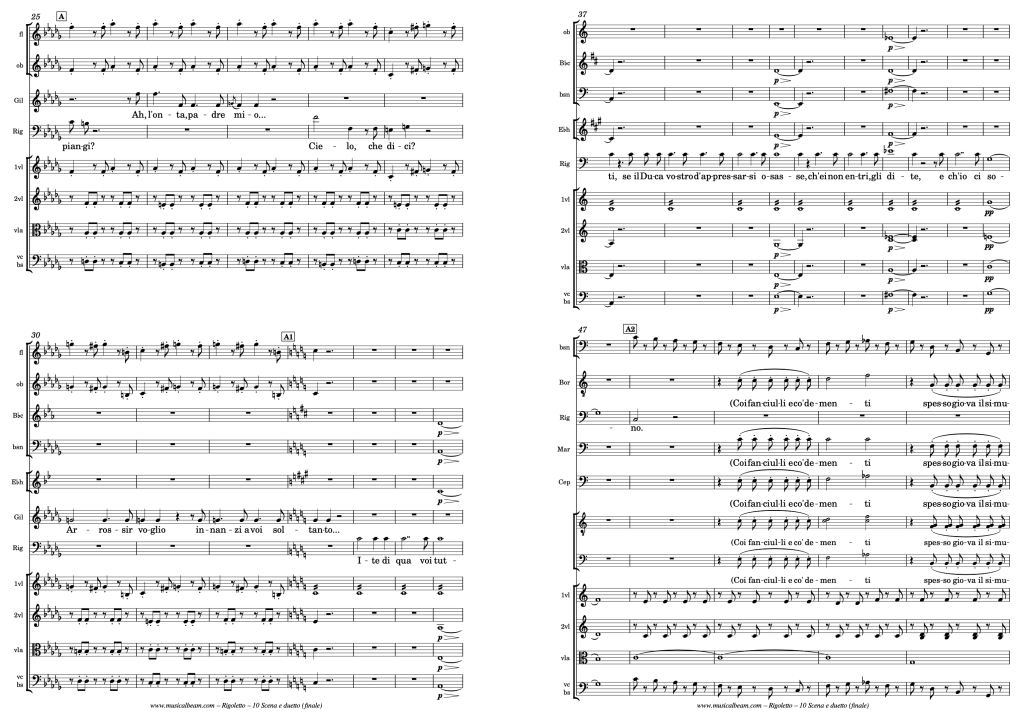
- Rigoletto for Chamber Orchestra (18-28 players)
- Rigoletto for Chamber Ensemble (12-13 players)
- Rigoletto for Smaller Ensemble (7-9 players)
- Order Score & Parts of Rigoletto (Verdi)
The Origins of Rigoletto
In 1850, Verdi was commissioned by Venice’s Teatro La Fenice. He chose Victor Hugo’s Le Roi s’amuse, though the play had been banned in France for its frank critique of royal corruption. “This is the greatest subject I’ve ever set to music,” Verdi wrote to Piave, but the challenge lay in navigating censors. Austrian authorities in Venice rejected the original setting and characters. Verdi, furious, called the interference “an outrage against art.” After intense negotiation, the setting shifted to Renaissance Mantua, and the king became the Duke of Mantua. The jester Triboulet became Rigoletto.
Despite compromises, Verdi remained deeply invested. He composed feverishly while in Busseto and later in Paris, often confiding his frustrations to Giuseppina Strepponi: “The censors are killing me, but I will not let them kill this opera.” Verdi’s daring structure—opening with a party scene, integrating arias and ensembles fluidly—reflected his ambition to elevate operatic drama. The character of Rigoletto, a cruel jester and loving father, fascinated Verdi: “A creation! Entirely new!” The score’s emotional contrasts, from sinister to tender, and the use of recurring motifs, would influence generations of composers.
Rigoletto: the Secret of a Triumph
Despite fears over censorship and subject matter, Rigoletto premiered to thunderous applause. The Venetian audience, initially wary of the opera’s moral ambiguity, was overwhelmed by its emotional power and musical brilliance. Critics hailed Verdi’s boldness. “A triumph without precedent,” reported Gazzetta di Venezia. The Duke’s aria “La donna è mobile,” kept secret until the premiere, was an instant sensation—sung in the streets the very next morning. Verdi had warned the tenor: “Do not hum it outside the theater.” Audiences were captivated by the dramatic pacing and character depth.
Even skeptics of Hugo’s original play admitted the opera had transcended its source. Some conservative voices criticized the depiction of violence and seduction, but these concerns did little to halt Rigoletto’s rise. The opera was soon staged across Italy and Europe. In London and Paris, it confirmed Verdi’s reputation as the foremost opera composer of his time. Hector Berlioz praised the orchestration: “Rarely has such precision and passion been married.” In time, Rigoletto became emblematic of Verdi’s “reform operas,” bridging bel canto tradition with more modern drama. Its emotional core—paternal love twisted by vengeance—continues to resonate powerfully with audiences.
Rigoletto for Chamber Orchestra (18-28 players)
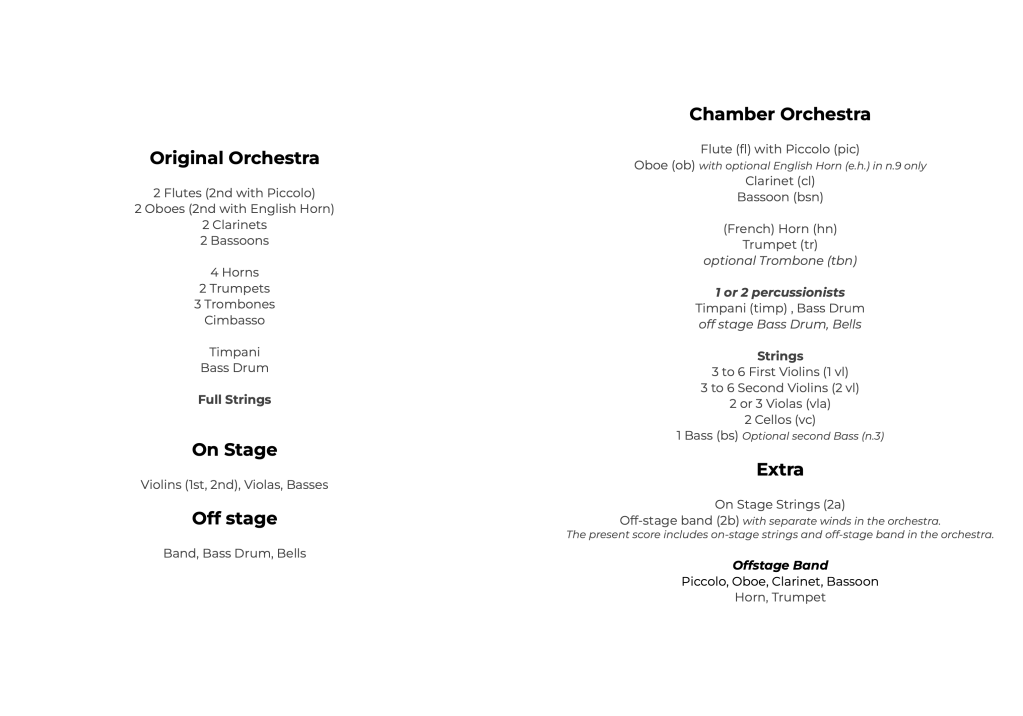
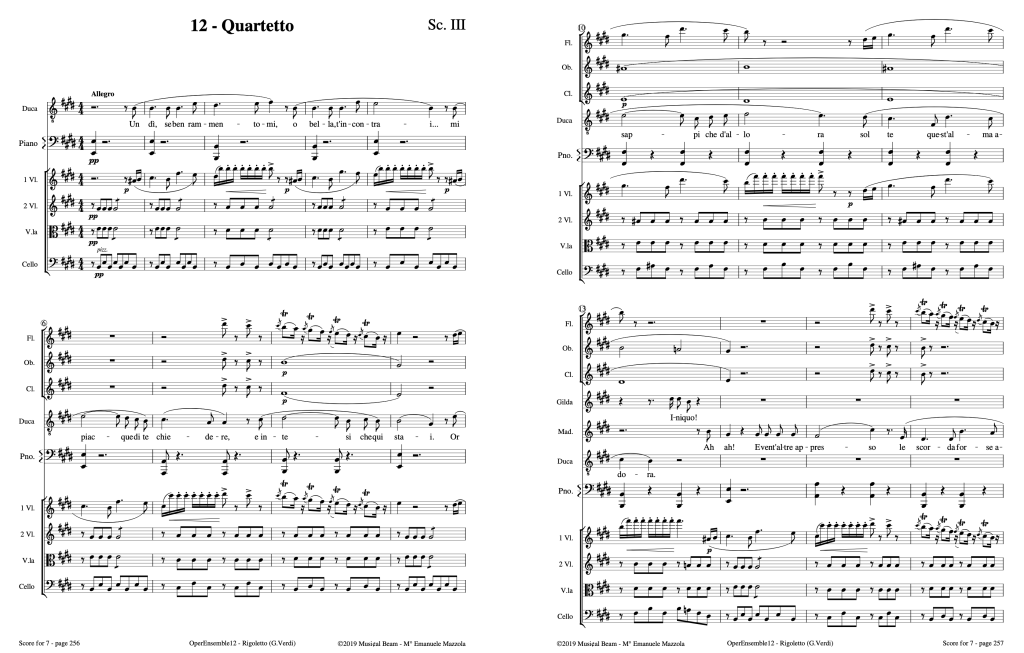
Rigoletto is scored for a classical mid-19th century orchestra: strings, woodwinds in pairs, horns, trumpets, trombones, timpani, and offstage banda for festive scenes. About 45–50 musicians are needed for a full performance. While Verdi wrote with full theatrical forces in mind, Rigoletto has been successfully adapted for smaller venues using chamber reductions. Care must be taken to preserve the sonic richness of the storm scene and the Act III quartet, both critical to the opera’s dramatic impact. Rigoletto for Chamber Orchestra requires:
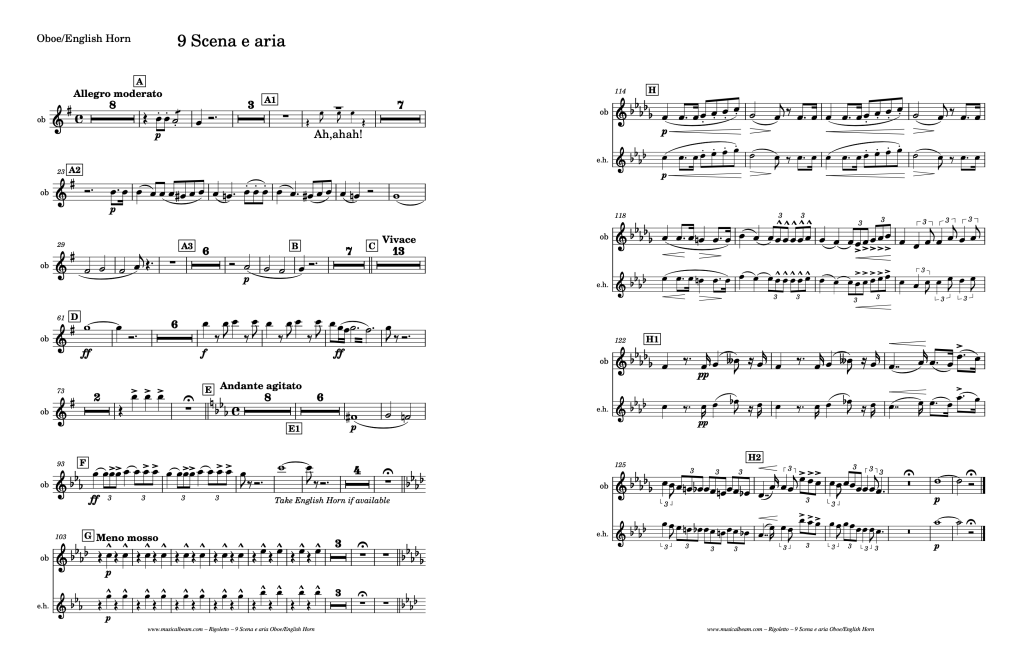
- Flute with piccolo, oboe (with optional english horn), clarinet, bassoon
- (French) Horn, trumpet
- Optional trombone
- 1 or 2 percussionists with timpani, bass drum, bells
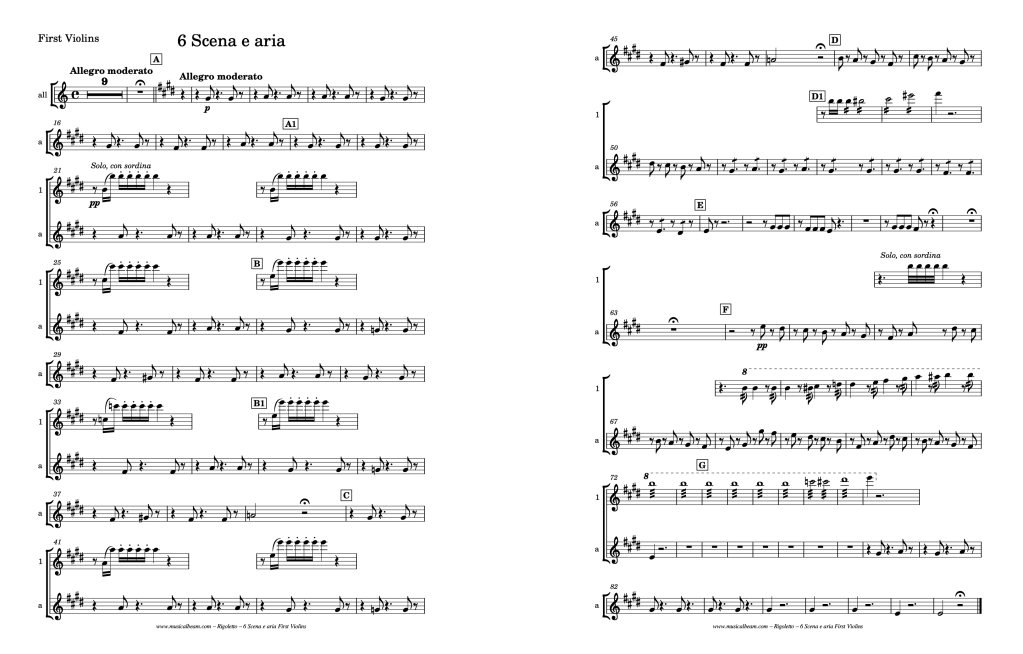
- String orchestra (11-19 players):
- 3-6 first violins
- 3-6 second violins
- 2-3 violas
- 2 cellos
- 1-2 basses (2nd bass is noted in one musical piece only)
- Extra: on-stage string quintet and off-stage band (piccolo, oboe, clarinet, bassoon, french horn, trumpet).


Rigoletto for Chamber Ensemble (12-13 players)
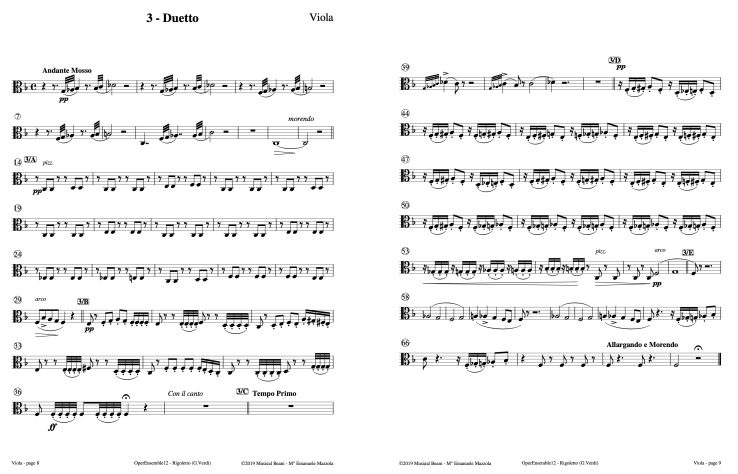
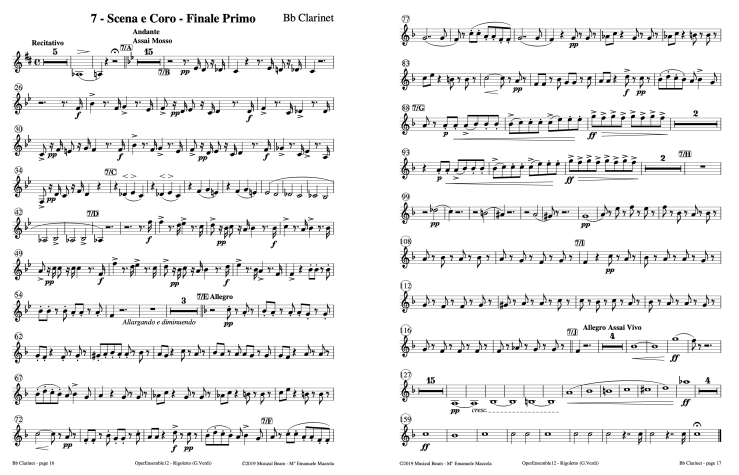
With only one player per string part, careful attention must be given to sound balance. Unlike the Chamber Orchestra version, which includes a fuller string section, the reduced string forces can be easily overpowered by winds or percussion. We recommend subtle amplification of the strings where possible, or alternatively, strategic dynamic adjustments—such as reducing wind and percussion volume—to maintain clarity and ensemble blend. Rigoletto for Chamber Ensemble requires:
- Flute with piccolo, oboe (with optional english horn), clarinet, bassoon
- (French) Horn, trumpet
- 1 or 2 percussionists with timpani, bass drum, bells
- String quintet (1.1.1.1.1)
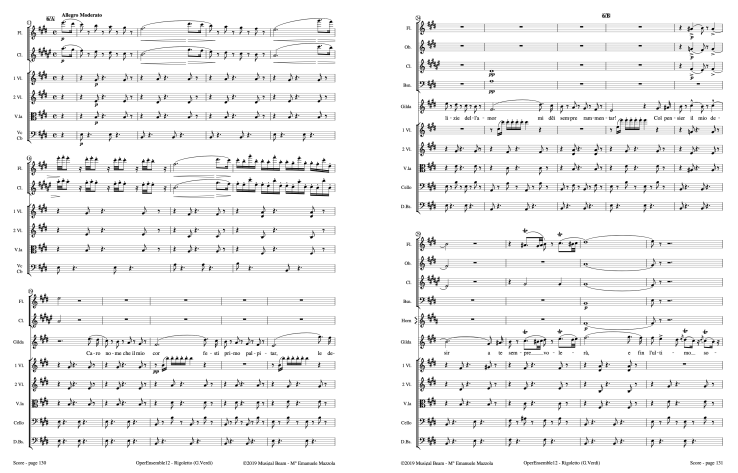
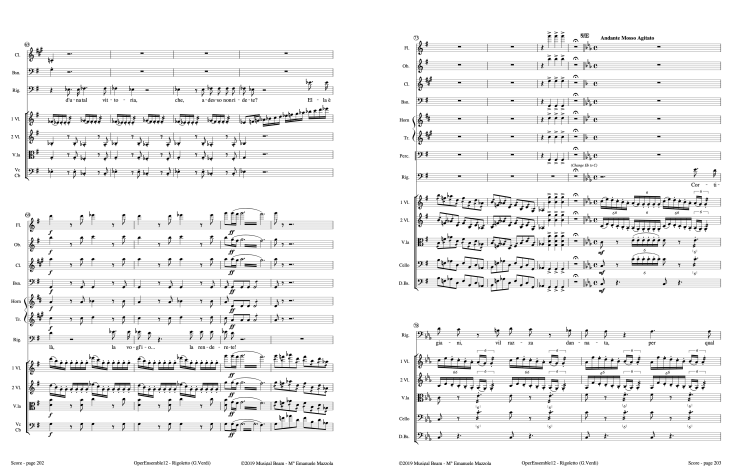
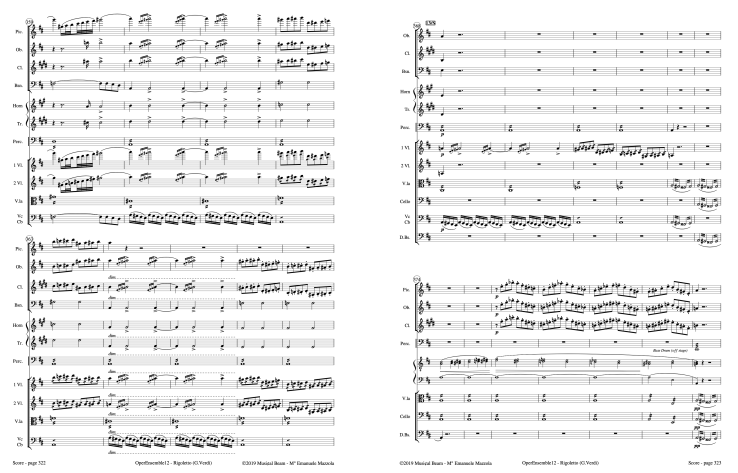
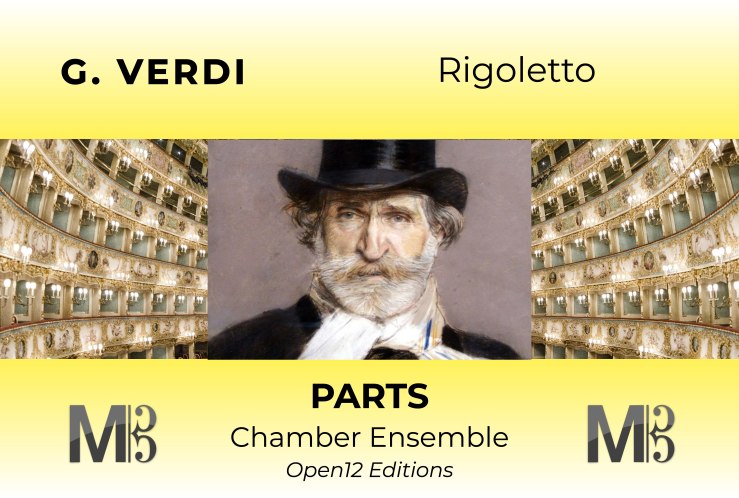
Open12 Edition
Open12 Editions are similar to the newer Chamber Ensemble versions.. The upgrade includes more options and higher printing standards, including cues in multi-rests and larger fonts. The Open12 Edition of Rigoletto will remain available until the Chamber Ensemble version is issued.



Rigoletto for Smaller Ensemble (7-9 players)
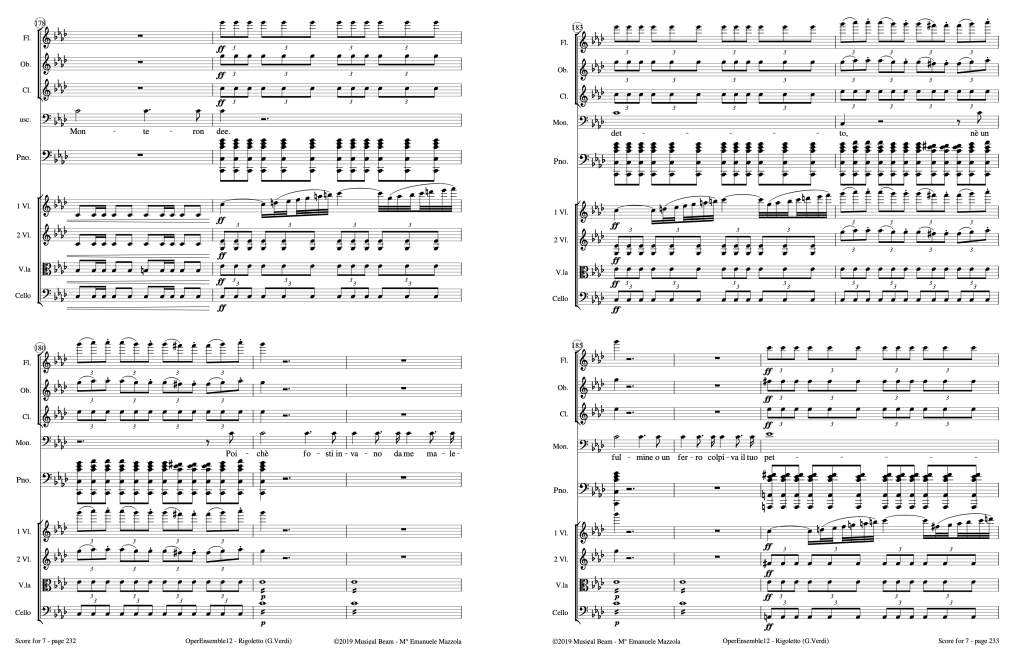
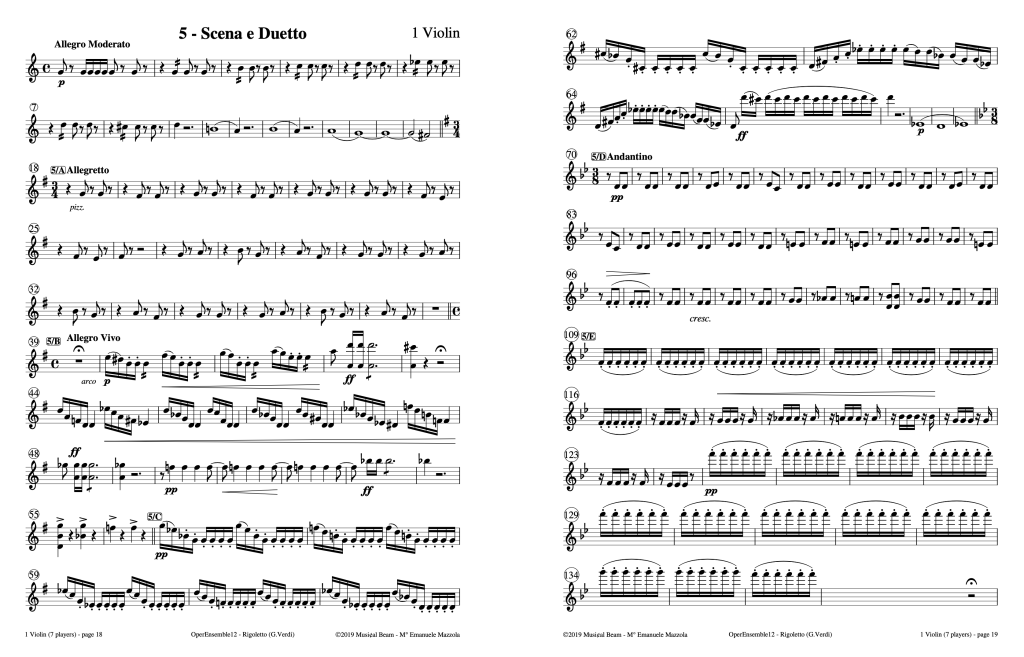
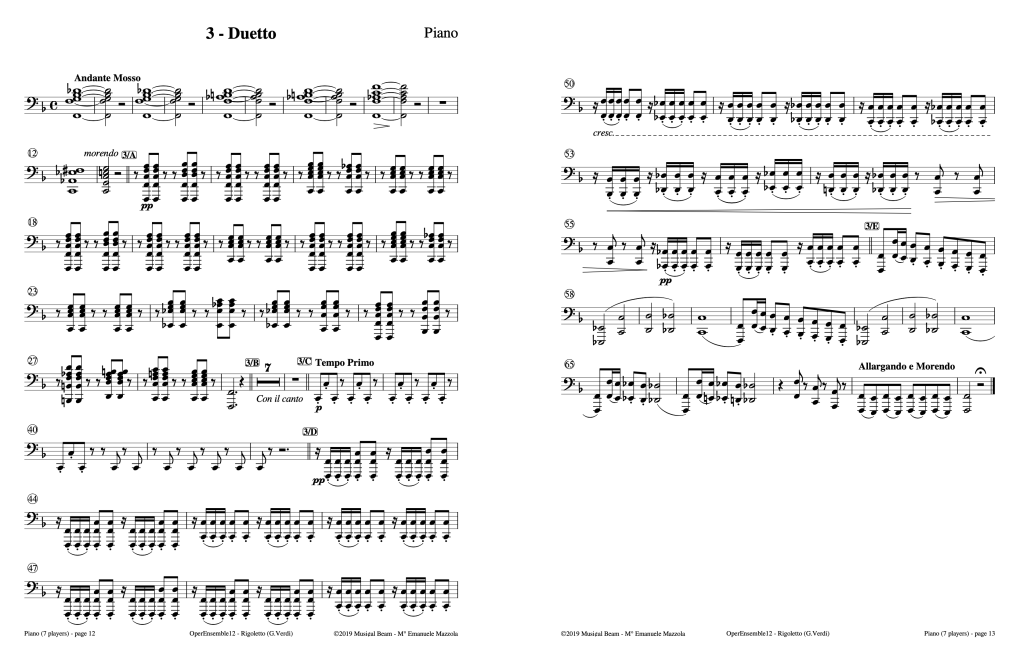
The Smaller Ensemble version is designed for maximum reduction without compromising musical integrity. It features a string quartet, three woodwinds, and piano. The piano part is not a vocal score, but a fully notated performance part, often playable with one hand, intended for the conductor or a designated player. It reinforces the ensemble in forte and fortissimo sections, ensuring depth and rhythmic clarity. With its balanced orchestration across winds, strings, and keyboard percussion, this version requires no special adjustments and offers a complete and practical solution for venues with limited resources or space. Rigoletto for Smaller Ensemble is under preparation and will require:
- Flute, oboe, clarinet
- String quartet with optional bass
- Piano or keyboard (conductor)
Open7 Edition
Open7 Editions are similar to the newer Smaller Ensemble versions.. The upgrade includes more options and higher printing standards, including cues in multi-rests and larger fonts. The Open7 Edition of Rigoletto will remain available until the Smaller Ensemble version is issued.





 Musical Beam