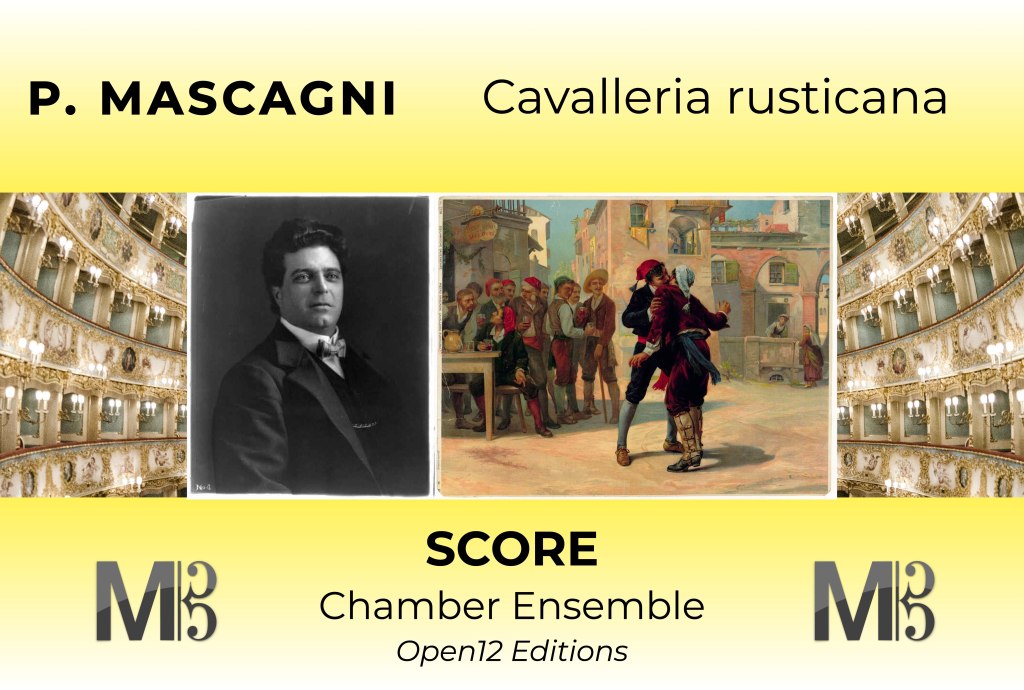
Premiered on May 17, 1890, at the Teatro Costanzi in Rome, Cavalleria Rusticana by Pietro Mascagni marked a turning point in opera history. Based on a short story and play by Giovanni Verga, the opera inaugurated the verismo (realism) movement in Italian opera, portraying raw emotion and everyday life in a Sicilian village. The libretto follows the tragic love triangle between Turiddu, Santuzza, and Lola. Mascagni’s lush orchestration and sweeping melodies—especially the famed “Intermezzo”—elevated this one-act work to lasting fame. Its intensity, brevity, and vivid storytelling reshaped operatic expectations.
- The Origins of Cavalleria
- Cavalleria: a Stunning Beginning
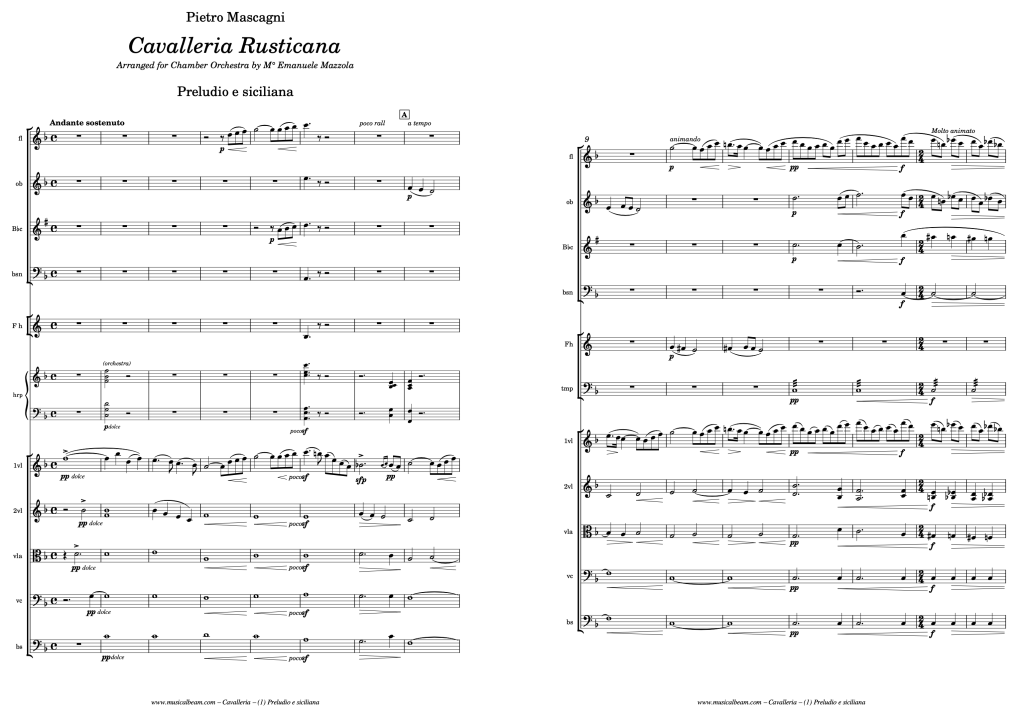
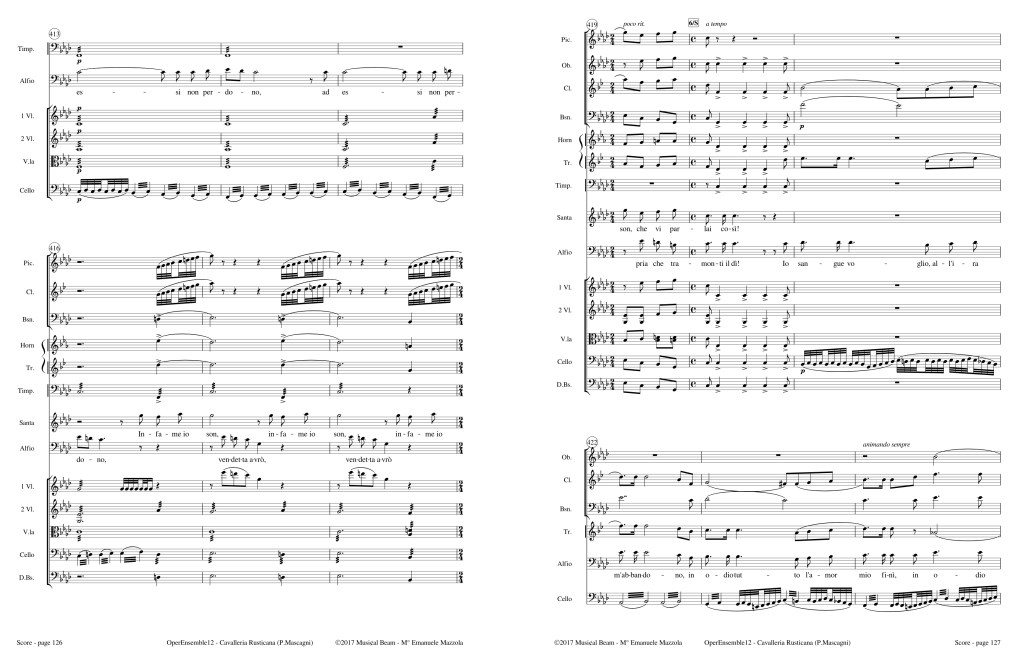
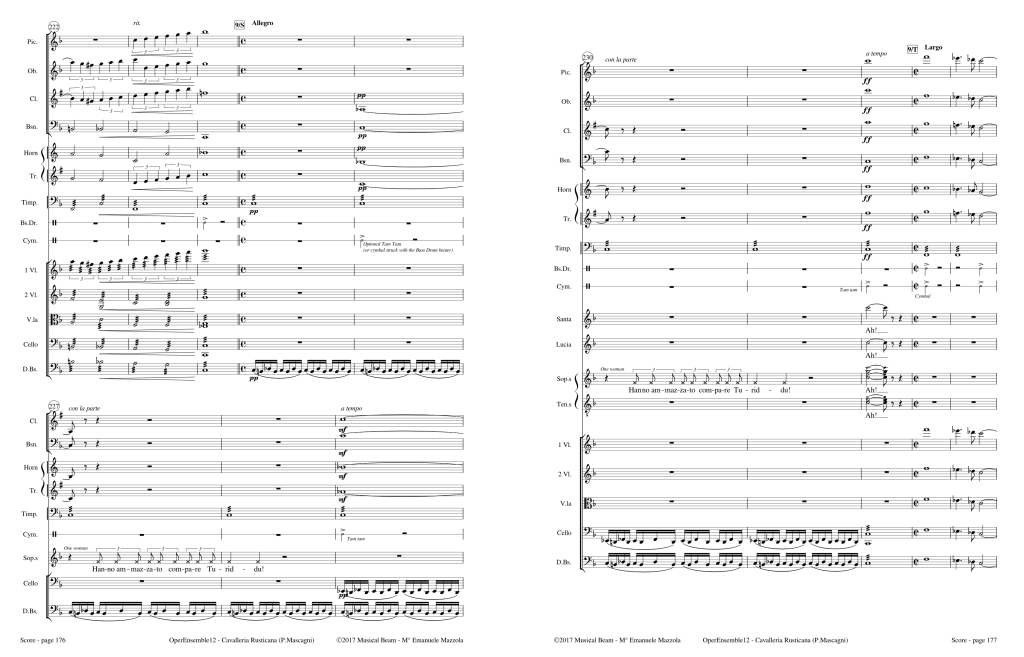
- Cavalleria for Chamber Orchestra (18-28 players)
- Cavalleria for Chamber Ensemble (13-15 players)
- Cavalleria Rusticana for Smaller Ensemble (7-9 players)
- Order Score & Parts of Cavalleria Rusticana (Mascagni)
The Origins of Cavalleria
In 1888, Milanese music publisher Edoardo Sonzogno announced a competition for young, unknown composers to submit one-act operas. Pietro Mascagni, then a little-known musician living in Cerignola in southern Italy, heard about the contest just before the deadline. Encouraged by his wife, Mascagni submitted Cavalleria Rusticana, based on Giovanni Verga’s story. The libretto was quickly adapted by his friends Targioni-Tozzetti and Menasci, working by mail, as time was short. Mascagni completed the score in a frenzy: “I wrote it with my heart in flames,” he later recalled. The music captured the earthy realism and emotional volatility of Verga’s world.
The opera’s style departed from the elegant formalism of earlier Italian opera. It embraced vernacular characters and intense passions, aligning with the verismo literary movement. Mascagni was inspired not just by Verga but by the rhythms and voices of southern Italy, infusing the score with folk flavor and a visceral sense of place. The inclusion of sacred music motifs—like the “Regina Coeli” hymn during the Easter procession—added spiritual weight to the drama. Though Mascagni feared the opera was too daring, it was selected as one of three winners from 73 submissions, launching his career overnight.
Cavalleria: a Stunning Beginning
Cavalleria Rusticana premiered to extraordinary acclaim on May 17, 1890, at Teatro Costanzi in Rome. The conductor, Leopoldo Mugnone, led a passionate performance that left the audience stunned. Mascagni was called to the stage over 40 times amid thunderous applause. The Italian press hailed it as the birth of a new musical era. “Mascagni has reinvented opera,” wrote Il Messaggero. Critics and composers alike took note—Puccini, though privately envious, called the opera “the beginning of something explosive.” The opera’s realism shocked some listeners unused to tales of adultery, revenge, and murder set among common villagers.
Nevertheless, the public was enthralled. The “Intermezzo sinfonico,” a brief orchestral meditation, became instantly iconic. Arturo Toscanini later remarked: “Mascagni gave us a music of the people, from the people.” International theaters quickly staged the opera: within a year it had been performed across Europe and the United States. In 1893, it was paired with Leoncavallo’s Pagliacci, cementing the famous double-bill still used today. Though Mascagni would never again achieve such success, Cavalleria Rusticana remained his enduring legacy. It not only brought him fame but inaugurated the verismo tradition, influencing Puccini, Giordano, and others in depicting real people, real suffering, and real emotions on the operatic stage.
Cavalleria for Chamber Orchestra (18-28 players)
Mascagni’s Cavalleria Rusticana requires a full Romantic orchestra: strings, woodwinds, brass (including 3 trombones), harps, organ, timpani, and percussion. The score calls for around 50–60 players, especially for the rich textures in the Easter procession and the Intermezzo. However, chamber orchestrations have proven successful in smaller venues. Given the opera’s compact form (one act, under 90 minutes), and the small number of solo roles, it lends itself well to touring productions and minimalist stagings without sacrificing dramatic impact. Cavalleria for Chamber Orchestra requires:
- Flute, optional piccolo, oboe, clarinet, bassoon
- (French) Horn, trumpet
- A keyboard for harps, organ and chimes
- 1 or 2 percussionists with timpani, bass & snare drum, cymbals, tam-tam
- String orchestra (10-18 players):
- 3-6 first violins
- 3-6 second violins
- 2-3 violas
- 1-2 cellos
- 1 bass






Cavalleria for Chamber Ensemble (13-15 players)
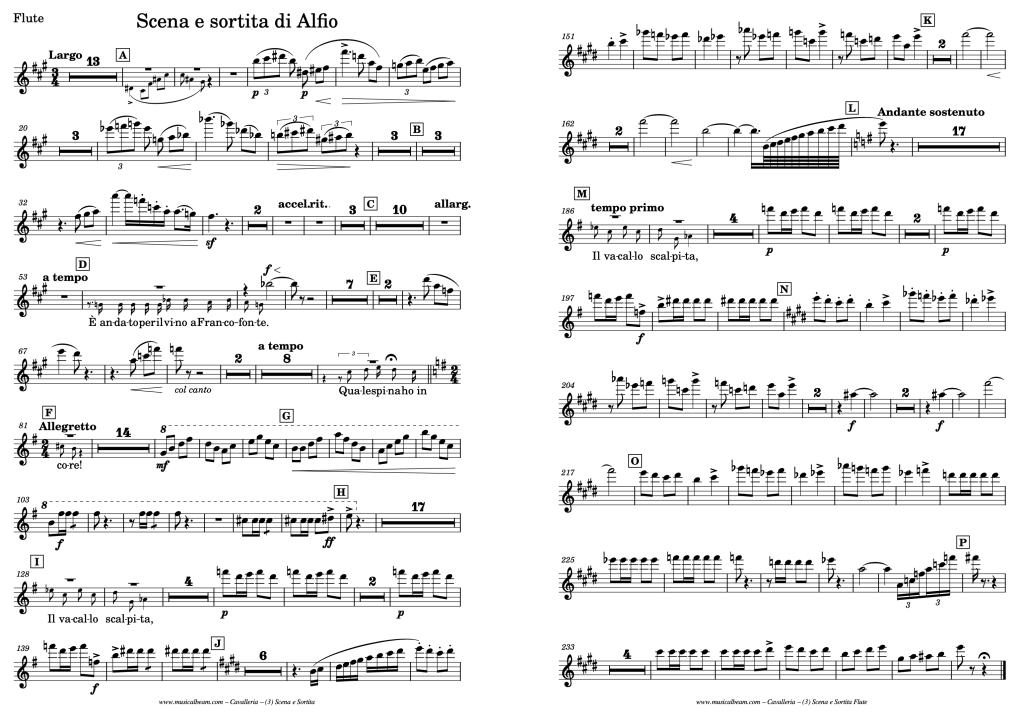
With only one player per string part, careful attention must be given to sound balance. Unlike the Chamber Orchestra version, which includes a fuller string section, the reduced string forces can be easily overpowered by winds or percussion. We recommend subtle amplification of the strings where possible, or alternatively, strategic dynamic adjustments—such as reducing wind and percussion volume—to maintain clarity and ensemble blend. Cavalleria Rusticana for Chamber Ensemble is under preparation and will require:
- Flute, optional piccolo, oboe, clarinet, bassoon
- (French) Horn, trumpet
- A keyboard for harps, organ and chimes
- 1 or 2 percussionists with timpani, bass & snare drum, cymbals, tam-tam
- String quintet (1.1.1.1.1)
Open12 Edition
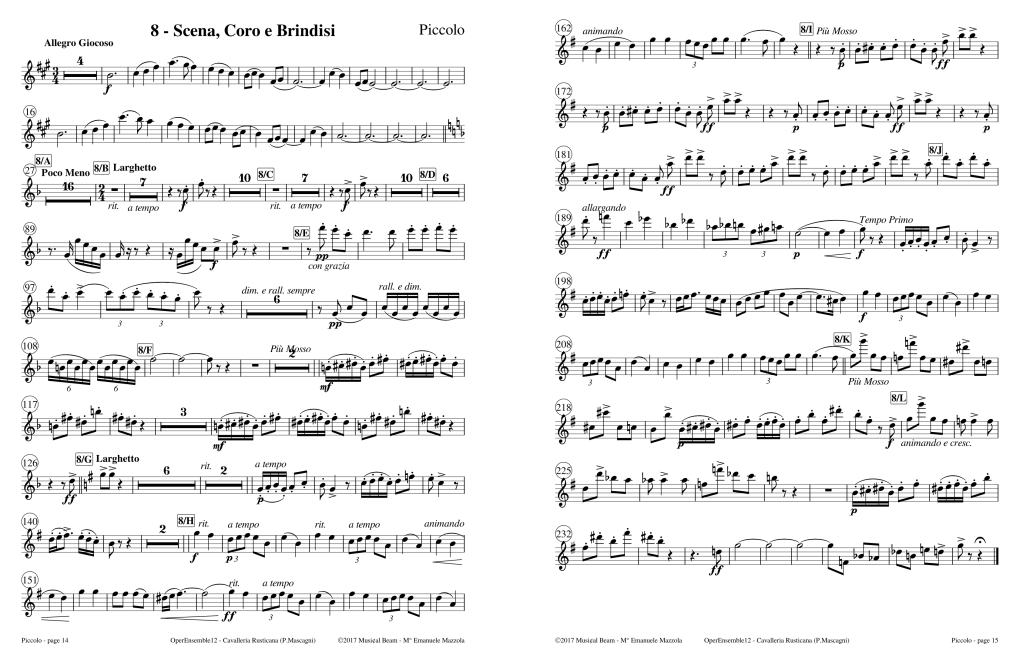
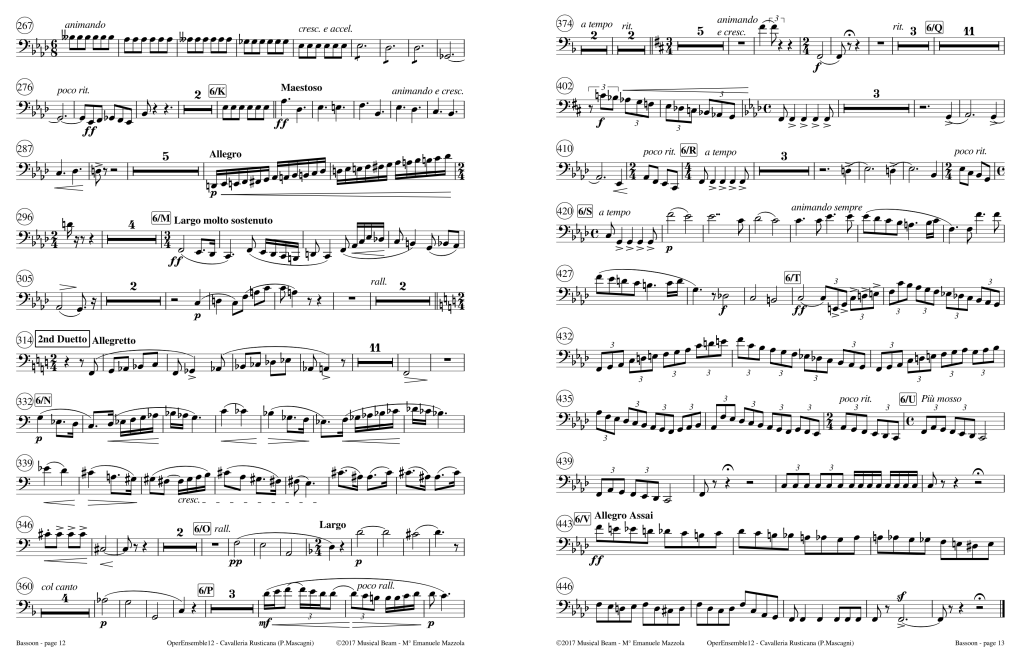
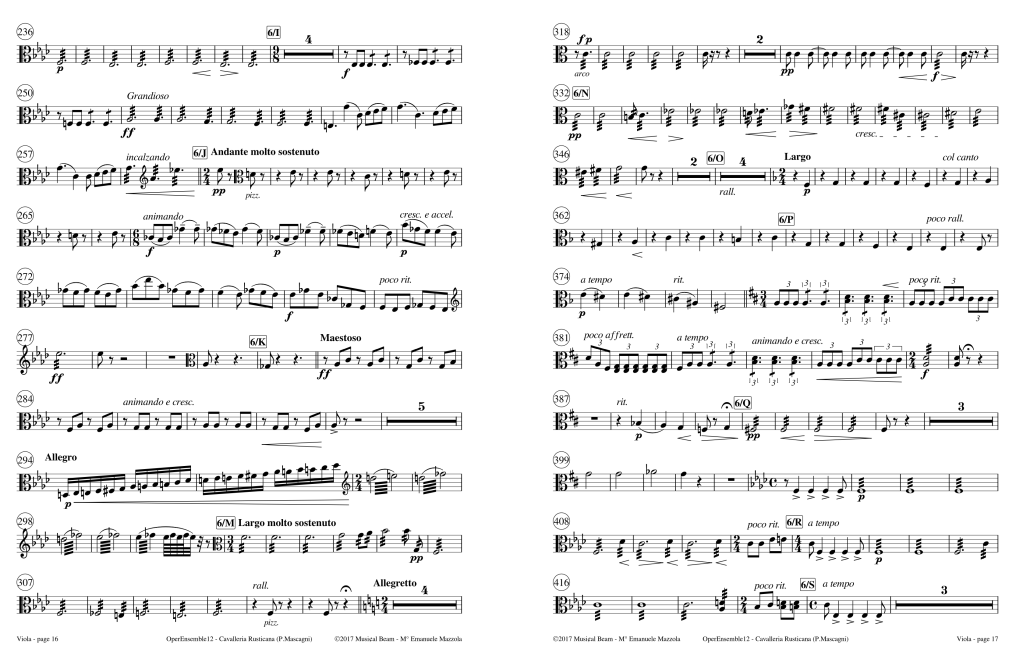
Open12 Editions are similar to the newer Chamber Ensemble versions.. The upgrade includes more options and higher printing standards, including cues in multi-rests and larger fonts. The Open12 Edition of Cavalleria Rusticana will remain available until the Chamber Ensemble version is issued.


Cavalleria Rusticana for Smaller Ensemble (7-9 players)
The Smaller Ensemble version is designed for maximum reduction without compromising musical integrity. It features a string quartet, three woodwinds, and piano. The piano part is not a vocal score, but a fully notated performance part, often playable with one hand, intended for the conductor or a designated player. It reinforces the ensemble in forte and fortissimo sections, ensuring depth and rhythmic clarity. With its balanced orchestration across winds, strings, and keyboard percussion, this version requires no special adjustments and offers a complete and practical solution for venues with limited resources or space. Cavalleria for Smaller Ensemble is under preparation and will require:
- Flute, oboe, clarinet
- String quartet with optional bass
- Piano or keyboard (conductor)


 Musical Beam