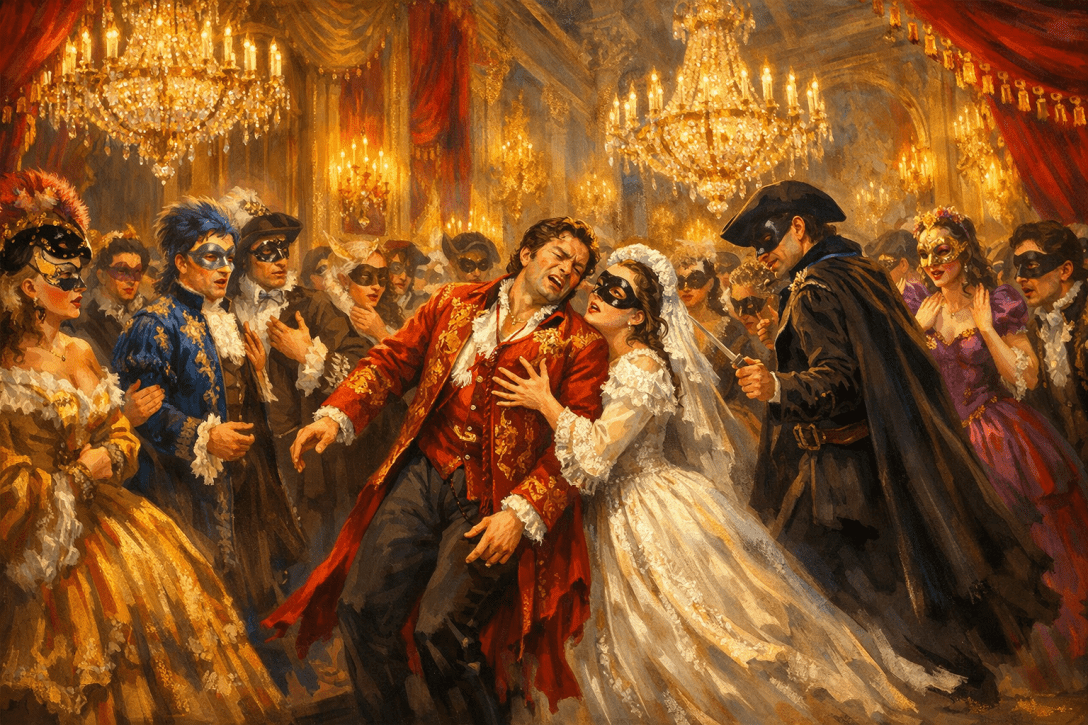
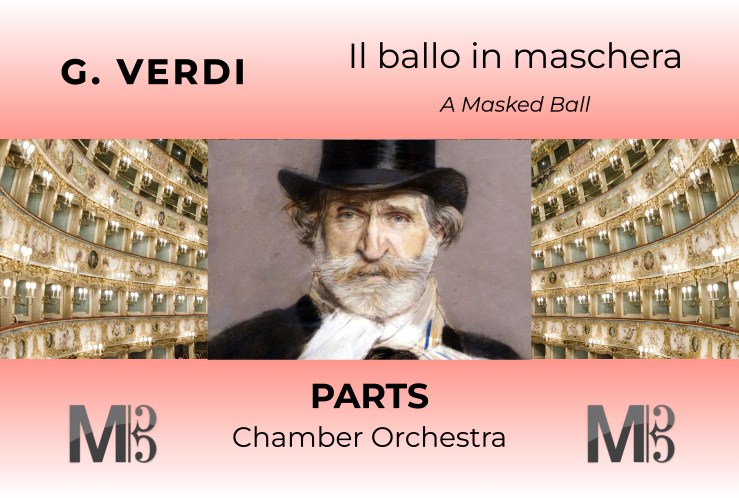
Un Ballo in Maschera premiered on February 17, 1859, at the Teatro Apollo in Rome. It is based loosely on the assassination of King Gustav III of Sweden. Political censorship forced changes to the opera’s setting and characters, transforming a historical regicide into a romanticized tragedy set in colonial Boston. The opera explores themes of love, betrayal, duty, and fate. Rich in melodic invention and psychological complexity, it includes some of Verdi’s most dramatic arias and ensembles. Despite its troubled genesis, it remains a pillar of the 19th-century Italian operatic canon.
- The Origins of A Masked Ball
- Un Ballo in Maschera: a Triumphal Destiny
- A Masked Ball for Chamber Orchestra (16-27 players)
- Un Ballo in Maschera for Chamber Ensemble (12-14 players)
- A Masked Ball for Smaller Ensemble (7-9 players)
- Order Score & Parts of Ballo (Verdi)
The Origins of A Masked Ball
Verdi initially conceived the opera under the title Gustavo III, based on the real-life assassination of the Swedish king at a masked ball in 1792. However, because of the politically sensitive subject of regicide, Neapolitan and Papal censors demanded extensive revisions. Verdi furiously protested: “The work is mine, and I will not allow it to be disfigured!” When negotiations failed in Naples, he moved the project to Rome, where he and librettist Antonio Somma grudgingly shifted the setting from Sweden to colonial Boston and renamed the protagonist Riccardo.
Despite Verdi’s disdain for the imposed changes, he forged ahead with the music. He worked intensely at his villa in Sant’Agata, blending lyricism and dramatic urgency. Amelia’s aria “Morrò, ma prima in grazia” and Riccardo’s “Ma se m’è forza perderti” reflect Verdi’s mastery of character-driven melody. The use of supernatural elements—such as the fortune-teller Ulrica—evoked earlier Romantic opera but infused with Verdi’s mature dramatic technique. The political unrest of the 1850s, with Italy striving for unification, made Verdi sensitive to censorship and patriotic subtext. The opera’s themes of assassination and moral conflict resonated deeply with contemporary audiences, even in its disguised form.
Un Ballo in Maschera: a Triumphal Destiny
Despite its convoluted path to the stage, Un Ballo in Maschera was a triumph at its Roman premiere. Verdi himself did not attend, wary of the production and its compromises. Yet the audience responded with enthusiasm, and the press declared it “a splendid return to Verdi’s finest inspiration.” Critics praised the balance of dramatic coherence and musical invention. The role of Riccardo was sung by tenor Gaetano Fraschini, whose vocal charisma helped secure the opera’s success. One Roman critic noted, “Verdi has brought together love and destiny with a boldness few composers would attempt.”
Over time, the opera grew in esteem. In later revivals, especially when restored to the Swedish setting, its political and psychological depth became more evident. Richard Strauss admired Verdi’s use of irony and orchestration, while Arturo Toscanini called Ballo “a masterwork of structure and feeling.” The masked ball finale—where joy, jealousy, and fate collide in dazzling musical layers—became iconic. Today, Un Ballo in Maschera is regularly performed in both its Boston and Stockholm variants. Its central themes—honor, forbidden love, and the unpredictability of fate—remain powerfully relevant, and the opera is often lauded for its musical elegance and emotional immediacy.
A Masked Ball for Chamber Orchestra (16-27 players)
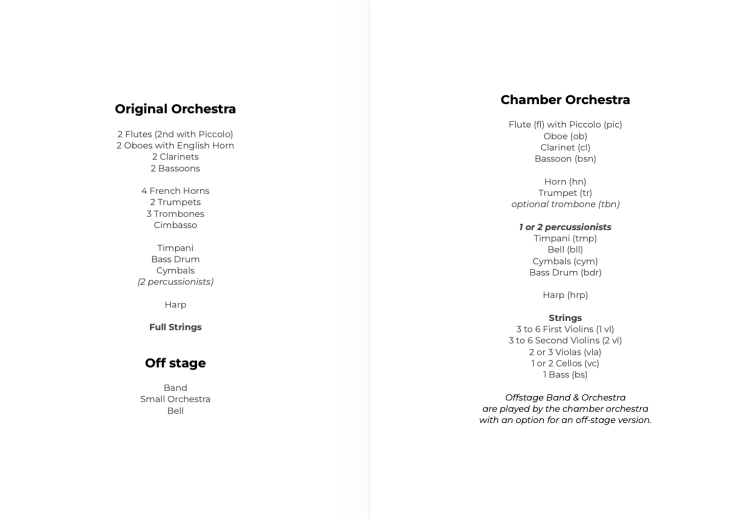
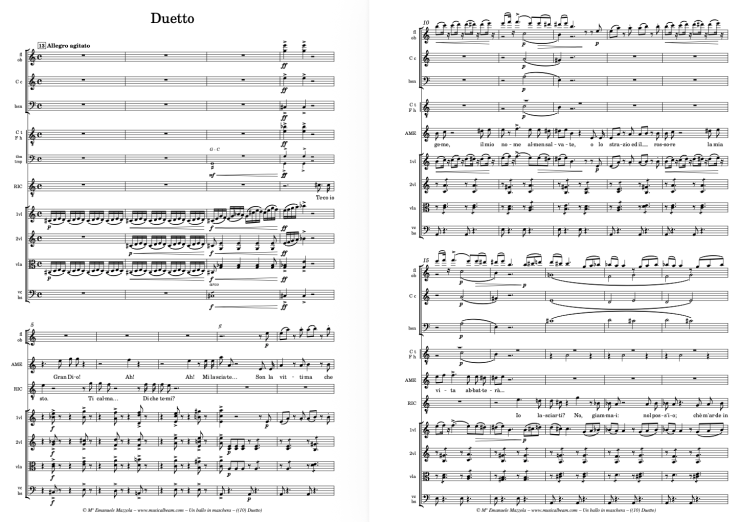
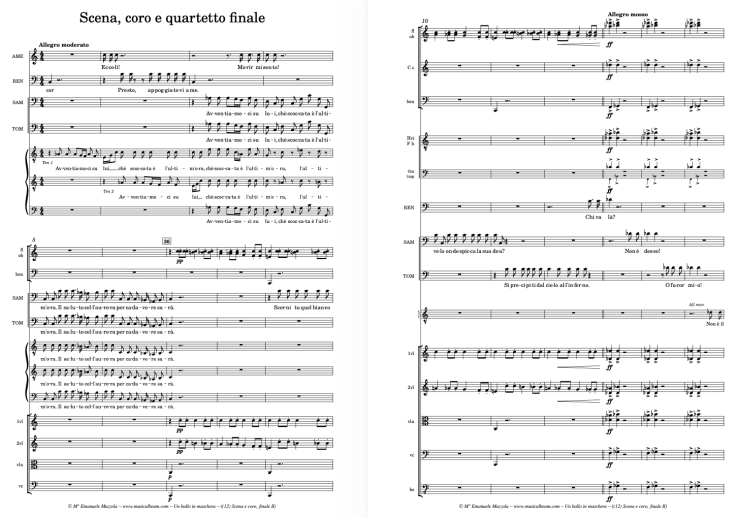
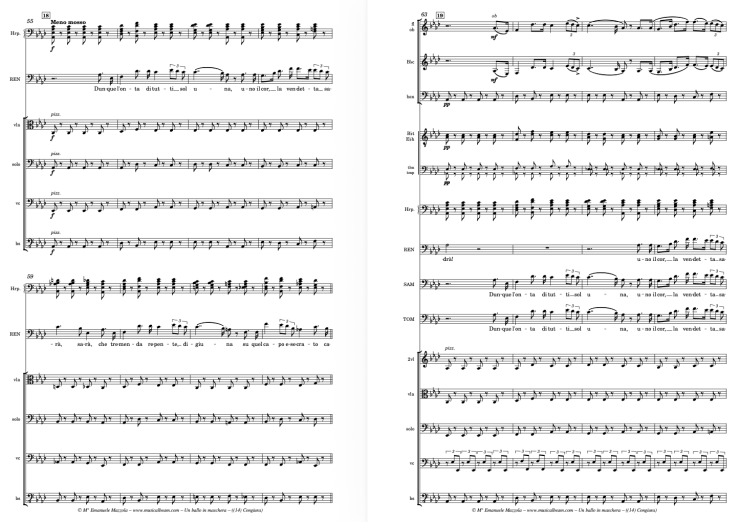
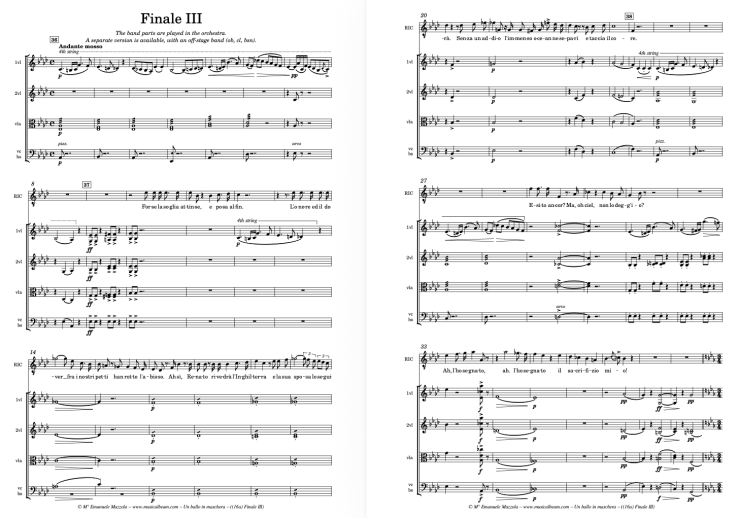
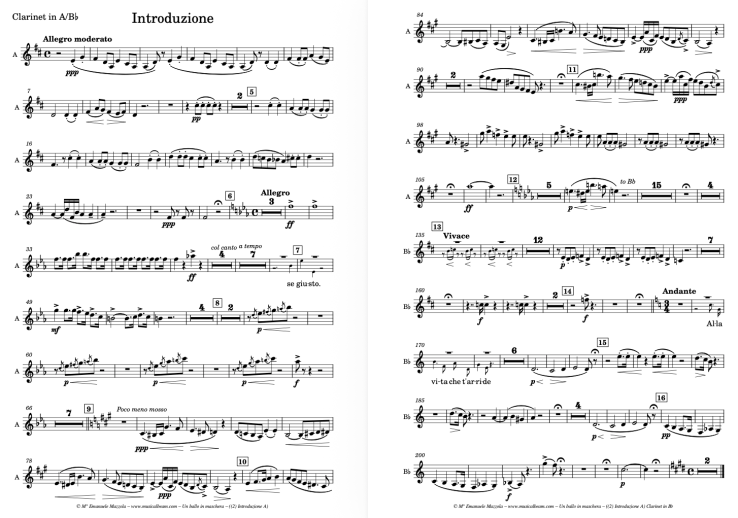
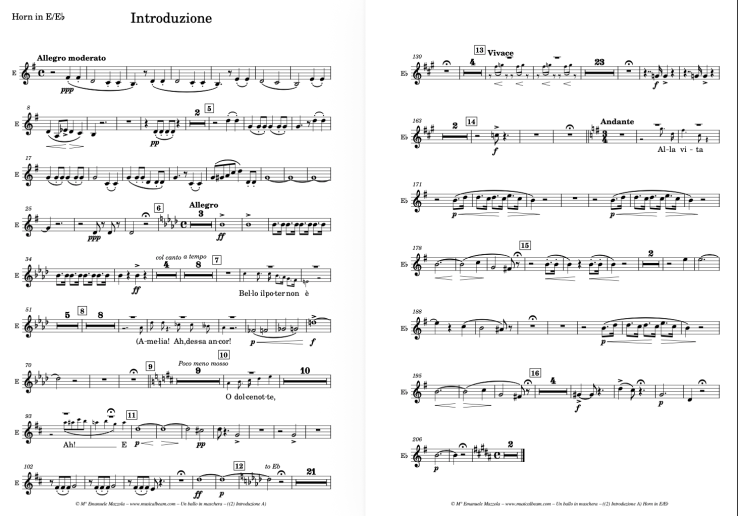
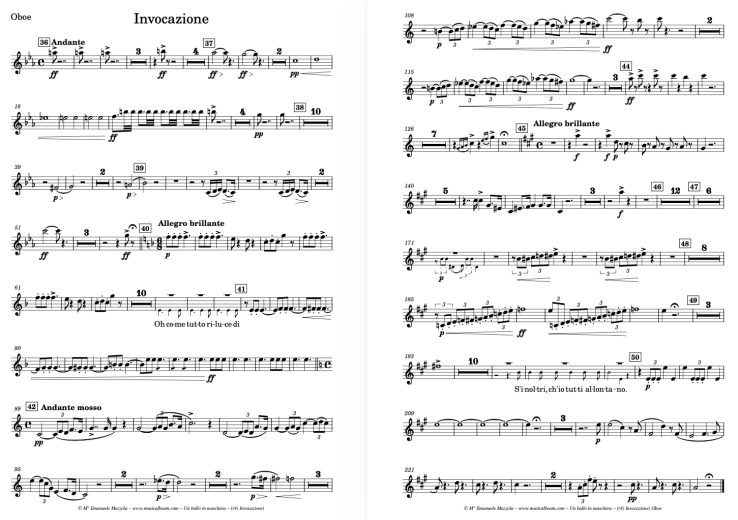
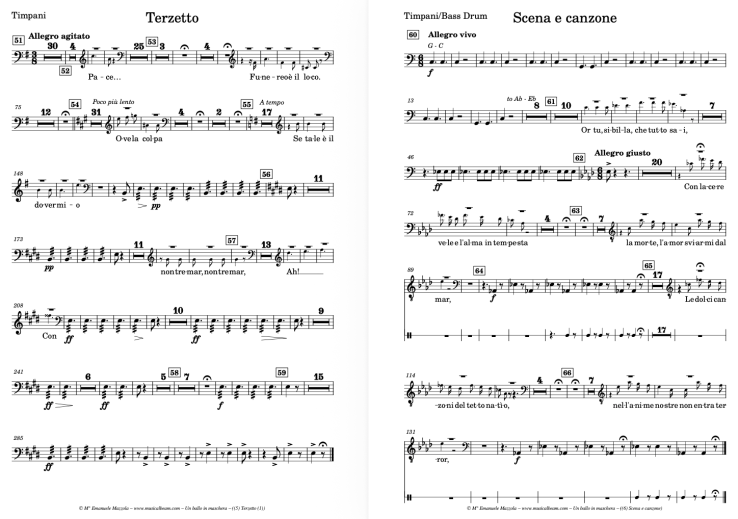
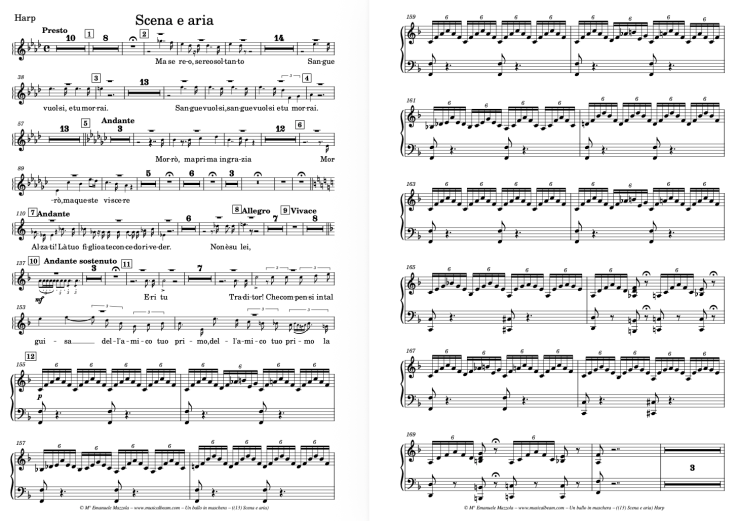
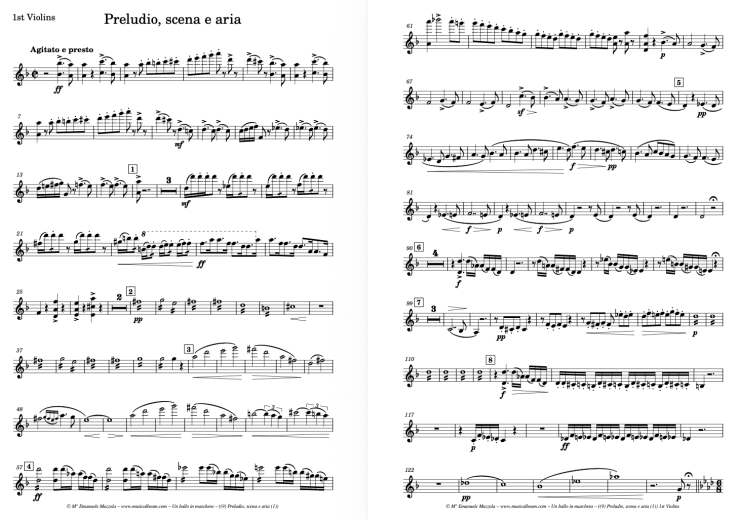
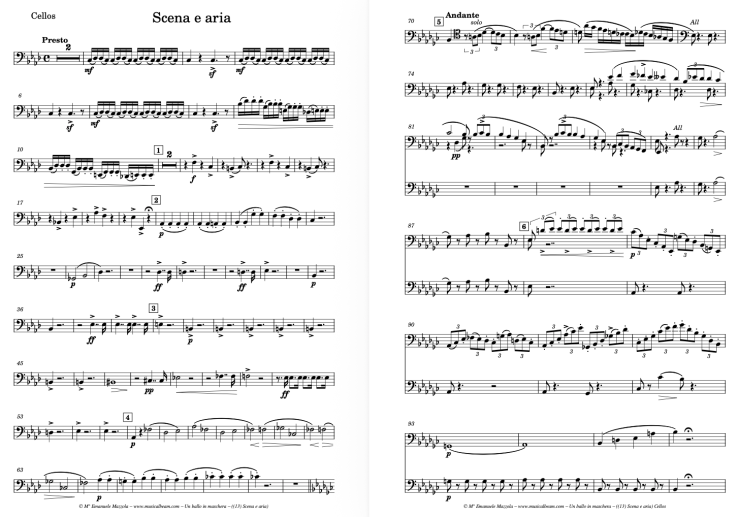
Verdi scored Un Ballo in Maschera for a full Romantic orchestra: strings, woodwinds (including piccolo and bass clarinet), brass (four horns, three trombones, trumpets), timpani, harp, and onstage banda, with significant choral involvement. The opera requires around 50–60 instrumentalists in full orchestration. While musically rich and layered, Ballo can be adapted for chamber productions, especially in smaller venues. Some elements—such as the ball scene—benefit from reduced orchestration that maintains dramatic focus without overwhelming the intimacy of the emotional conflicts. Un Ballo in maschera for Chamber Orchestra requires:
- Flute with piccolo, oboe, clarinet, bassoon
- (French) Horn, trumpet
- Optional trombone
- 1 or 2 percussionist: timpani, bell, cymbals, bass drum
- String orchestra (9-18 players):
- 3-6 first violins
- 3-6 second violins
- 2-3 violas
- 1-2 cellos
- 1 Bass
Un Ballo in Maschera for Chamber Ensemble (12-14 players)
With only one player per string part, careful attention must be given to sound balance. Unlike the Chamber Orchestra version, which includes a fuller string section, the reduced string forces can be easily overpowered by winds or percussion. We recommend subtle amplification of the strings where possible, or alternatively, strategic dynamic adjustments—such as reducing wind and percussion volume—to maintain clarity and ensemble blend. The Masked Ball for Chamber Ensemble is under preparation and will require:
- Flute with piccolo, oboe, clarinet, bassoon
- (French) Horn, trumpet
- Optional trombone
- 1 or 2 percussionist: timpani, bell, cymbals, bass drum
- String quintet
A Masked Ball for Smaller Ensemble (7-9 players)
The Smaller Ensemble version is designed for maximum reduction without compromising musical integrity. It features a string quartet, three woodwinds, and piano. The piano part is not a vocal score, but a fully notated performance part, often playable with one hand, intended for the conductor or a designated player. It reinforces the ensemble in forte and fortissimo sections, ensuring depth and rhythmic clarity. With its balanced orchestration across winds, strings, and keyboard percussion, this version requires no special adjustments and offers a complete and practical solution for venues with limited resources or space. Un Ballo in Maschera for Smaller Ensemble is under preparation and will require:
- Flute, oboe, clarinet
- String quartet with optional bass
- Piano or keyboard (conductor)


 Musical Beam