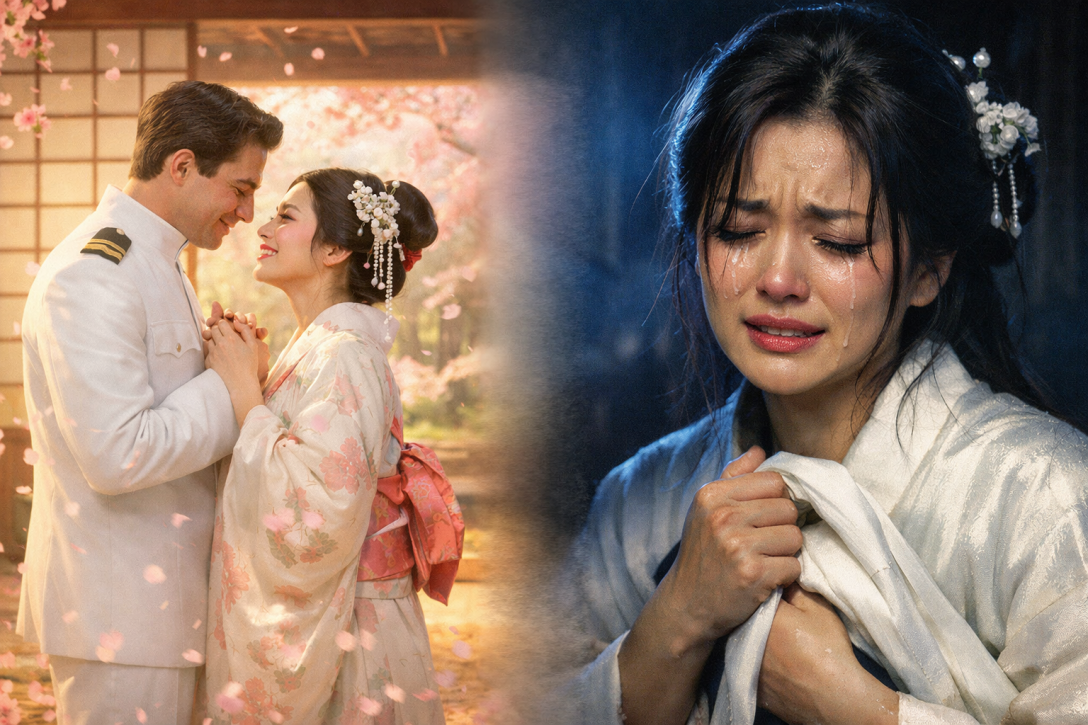
Puccini sketched the score from 1901 and completed multiple versions in 1904–07, in an originally two-act (later expanded to three) structure. The score mixes Puccini’s late-Romantic lyricism with exoticising Japanese color, intimate domestic scenes and sweeping orchestral moments. Though Puccini reworked the piece repeatedly, the “standard” version that most companies perform stems from revisions completed in 1907. After a notorious, hostile La Scala premiere Puccini revised the work and achieved triumph at Brescia three months later; the opera has since become one of the repertory’s staples.
- The Origins of Madama Butterfly
- Puccini’s Butterfly: the quick arc from fiasco to masterpiece
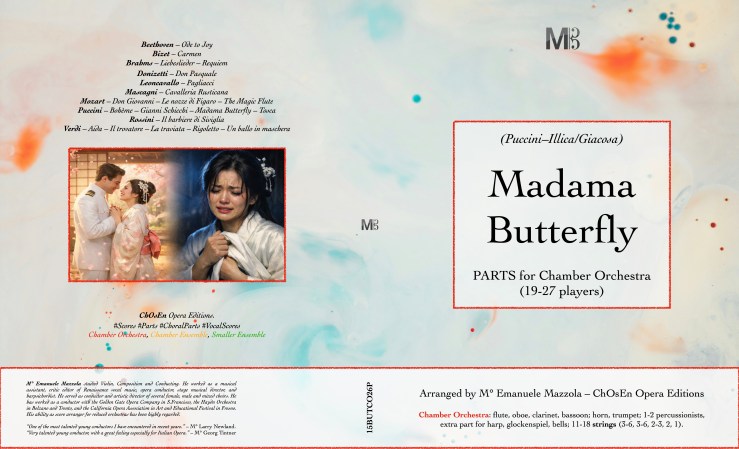
- Madama Butterfly for Chamber Orchestra (19-27 players)
- Madama Butterfly for Chamber Ensemble (13-14 players)
- Madama Butterfly for Smaller Ensemble (7-9 players)
- Order Score & Parts of Butterfly (Puccini)
The Origins of Madama Butterfly
Puccini worked closely with his librettists Illica and Giacosa to reshape Belasco’s theatre into an Italian operatic tragedy. Illica and Giacosa negotiated tone and structure while Puccini insisted on musical moments that captured Butterfly’s naïveté and the exoticised Japanese setting — part of the wider Japonisme vogue in Europe. Puccini’s correspondence during composition shows his emotional investment in the title role and his awareness of casting: in a letter he admonished the idea of losing Rosina Storchio from the project, writing that “Butterfly without Rosina Storchio becomes a thing without soul.” He also travelled, read about Japanese music and collected visuals to colour orchestration and stagecraft.
Puccini visited Paris and London in the years before composition, absorbing theatrical fashions and Japonisme that influenced his coloristic choices. Contemporary accounts describe Puccini as strongly moved by Belasco’s staging: according to Belasco, Puccini was reduced to tears and raced into the green room eager to secure the rights — an anecdote often cited to show how passionately the subject gripped him. Puccini went through successive drafts and substantial reworkings (he ultimately produced five versions), refining dramatic pacing and orchestral detail as he translated an American dramatization of Japan into Italian operatic terms.
Puccini’s Butterfly: the quick arc from fiasco to masterpiece
The La Scala premiere (17 February 1904) is infamous: despite high expectations, the evening dissolved into catcalls, whistles and mockery. Contemporary reports and later scholarship attribute the debacle to a combination of factors — inadequate rehearsal time, staging problems, audience hostility to the “exotic” subject, and perhaps a miscast lead. The press and public reportedly made crude jokes.
Puccini withdrew the opera and went back to revise it: he split the long second act, redistributed dramatic emphasis, and adjusted orchestration and vocal writing. The revised version premiered in Brescia on 28 May 1904 and was, by his own account, “a real and unqualified triumph,” with success growing each evening. The arc from fiasco to worldwide repertoire favourite has become part of Madama Butterfly’s legend.
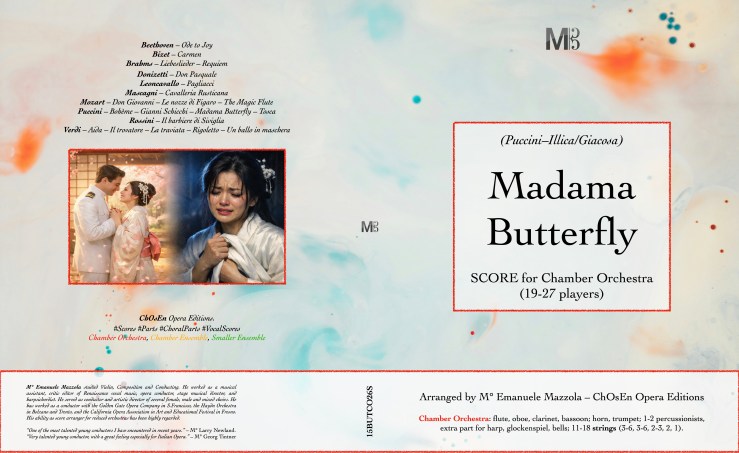
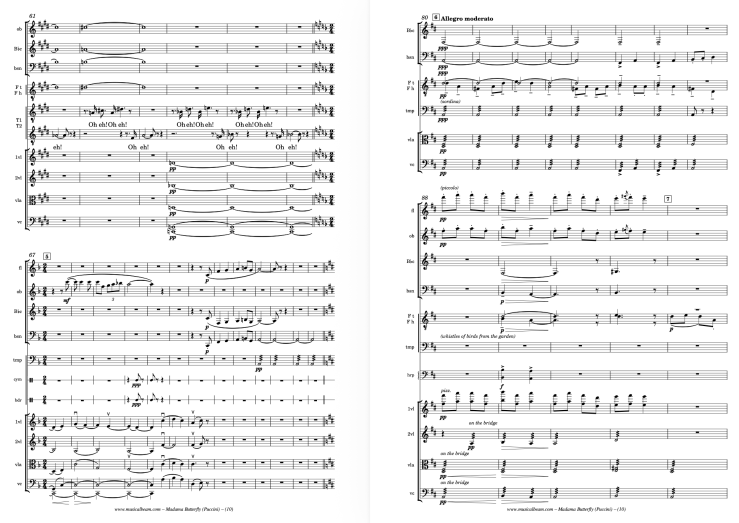
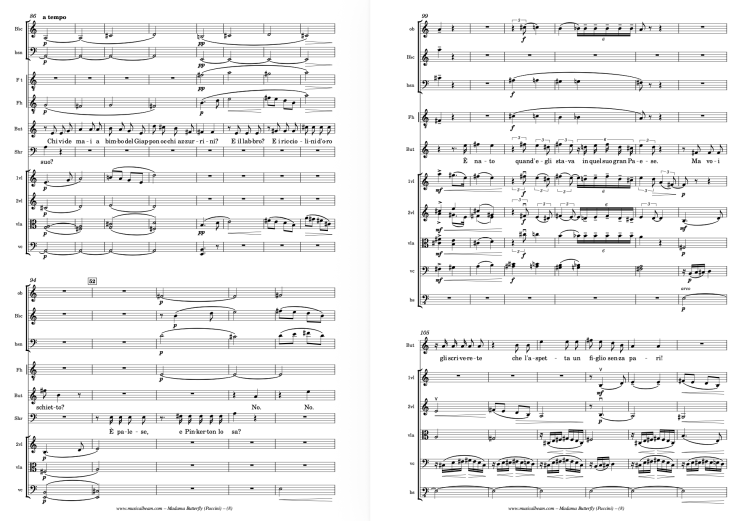
Madama Butterfly for Chamber Orchestra (19-27 players)
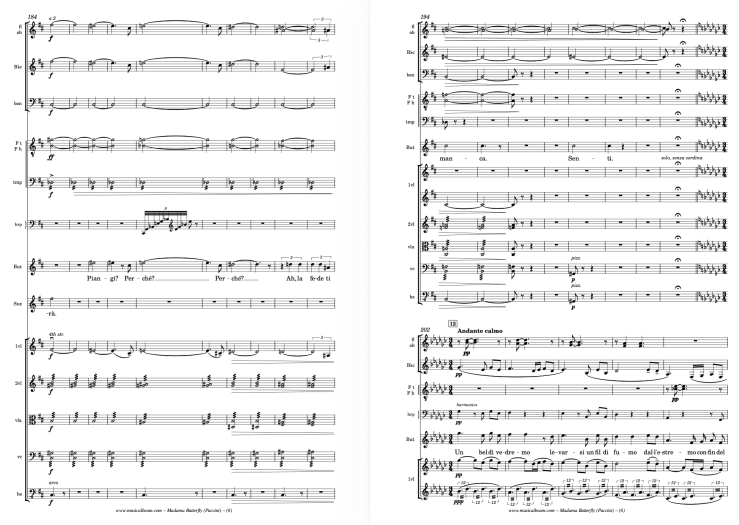
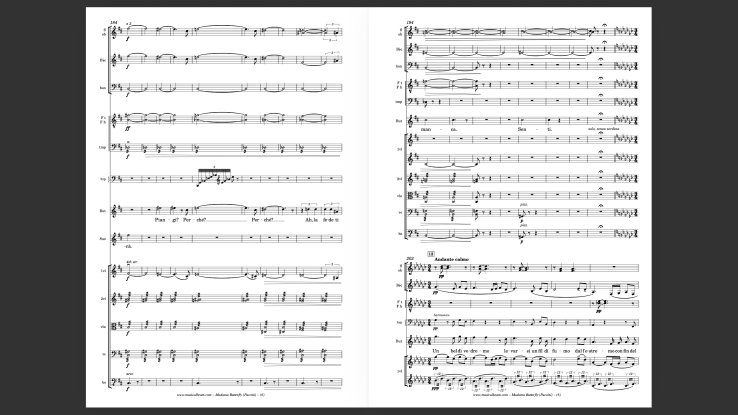
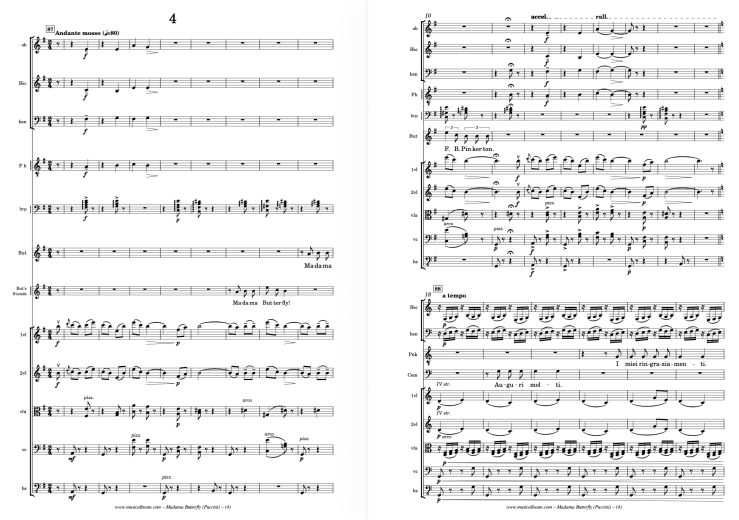
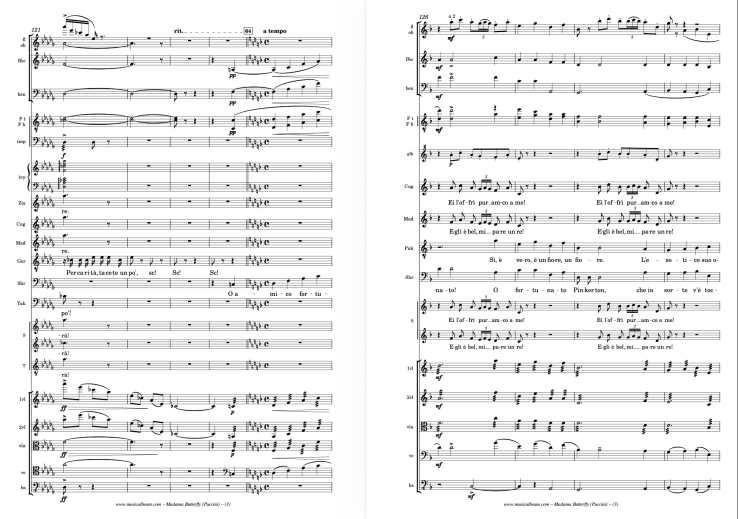
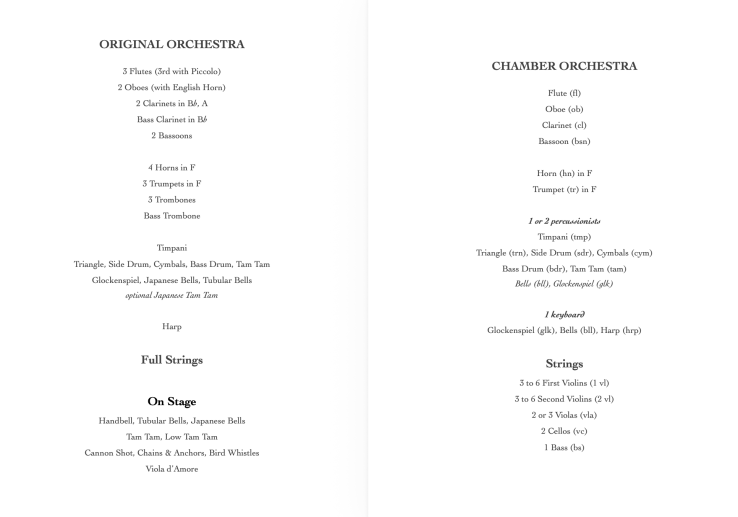
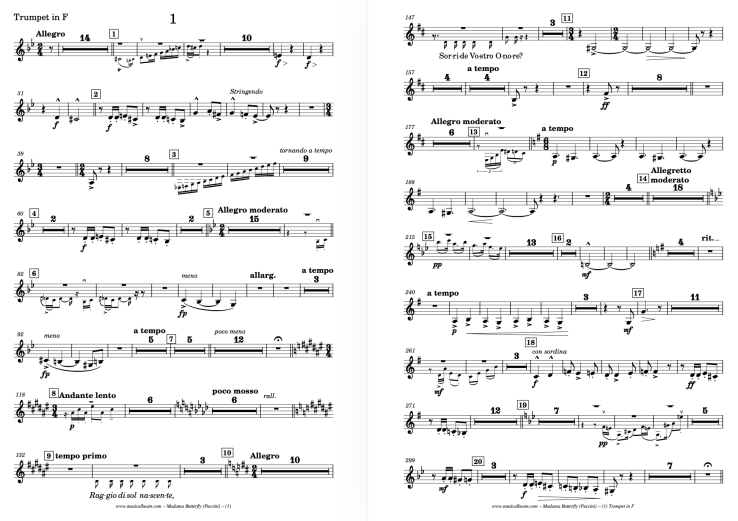
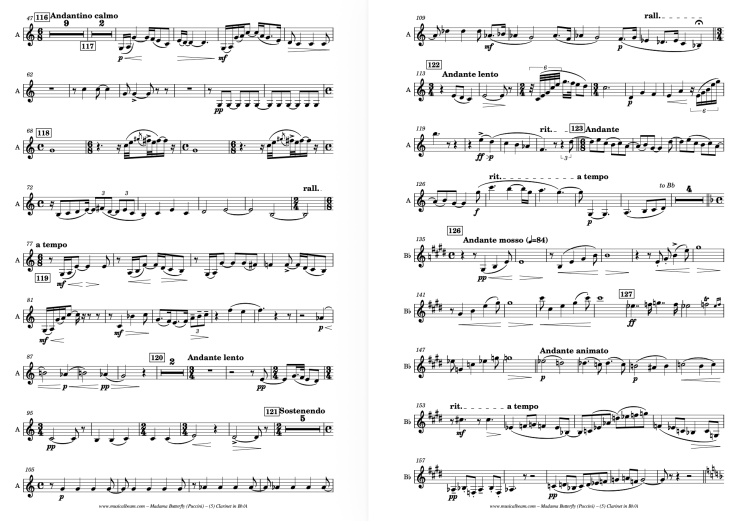
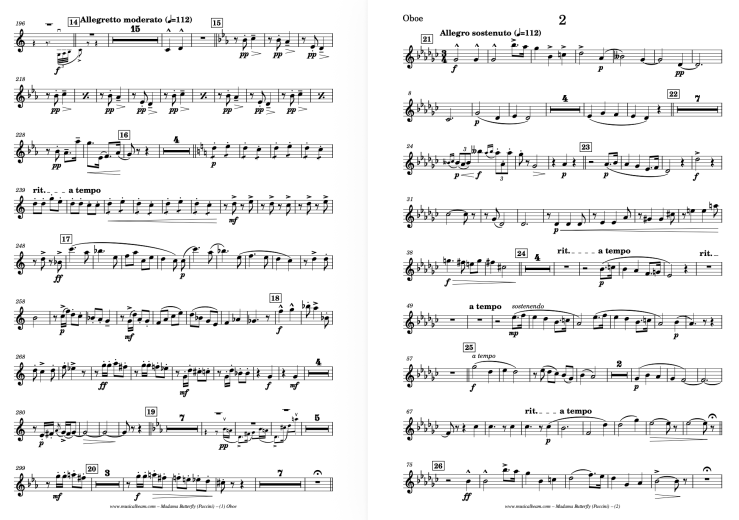
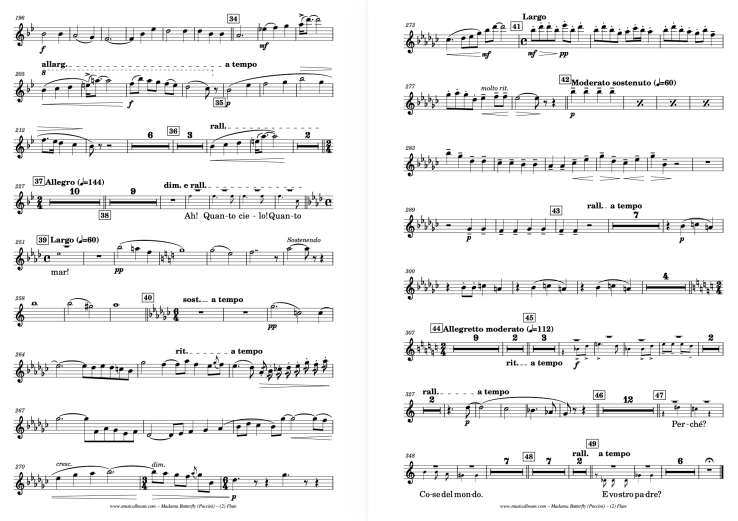
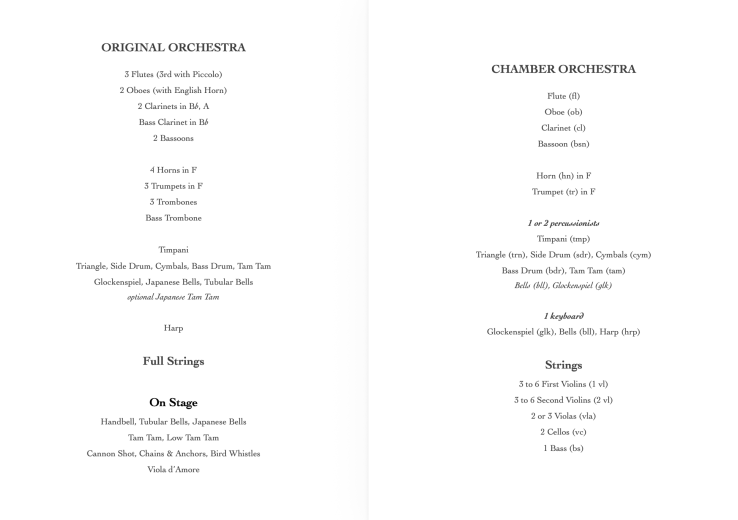
Puccini scored Madama Butterfly for a full late-Romantic pit typical of verismo opera: strings, a substantial woodwind and brass section, percussion (including exotic percussion effects), harp and an on-stage samisen/choral-like colour when required. Typical modern full productions use 60–80 players. The opera’s melodic clarity and intimate scenes make chamber reductions feasible: a carefully arranged version for 20–30 players preserves core textures and vocal balance. Butterfly for Chamber Orchestra requires:
- Flute, oboe, clarinet, bassoon
- (French) Horn, trumpet
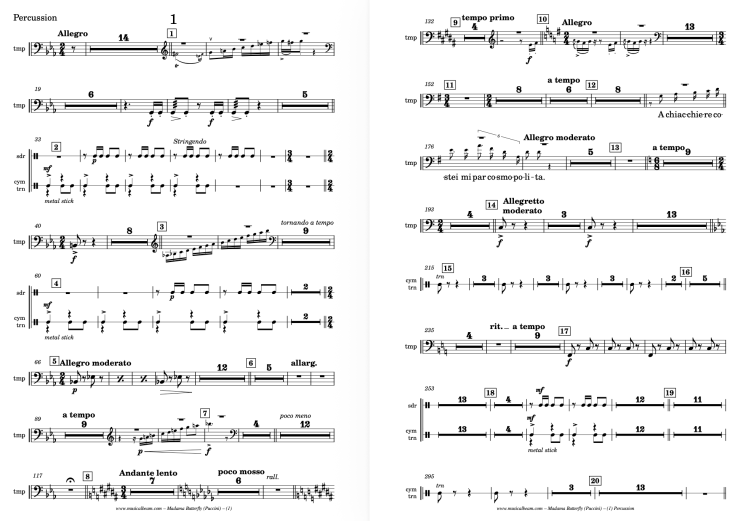
- 1-2 percussionists (timpani, triangle, side & bass drum, cymbals, tam tam)
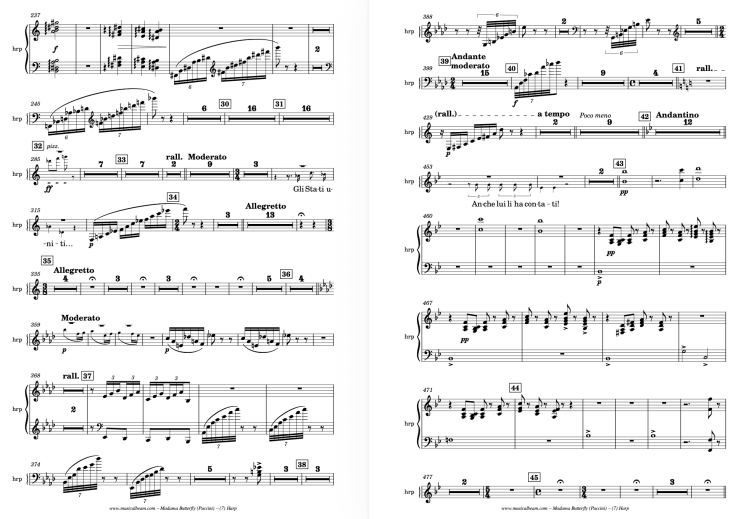
- Keyboard: glockenspiel, bells, harp
- String orchestra (11-18 players):
- 3-6 first violins
- 3-6 second violins
- 2-3 violas
- 2 cellos
- Bass
Madama Butterfly for Chamber Ensemble (13-14 players)
With only one player per string part, careful attention must be given to sound balance. Unlike the Chamber Orchestra version, which includes a fuller string section, the reduced string forces can be easily overpowered by winds or percussion. We recommend subtle amplification of the strings where possible, or alternatively, strategic dynamic adjustments—such as reducing wind and percussion volume—to maintain clarity and ensemble blend. Butterfly for Chamber Ensemble is under preparation and will require:
- Flute, oboe, clarinet, bassoon
- (French) Horn, trumpet
- 1-2 percussionists (timpani, triangle, side & bass drum, cymbals, tam tam)
- Keyboard: Glockenspiel, bells, harp
- String quintet (1.1.1.1.1)
Madama Butterfly for Smaller Ensemble (7-9 players)
The Smaller Ensemble version is designed for maximum reduction without compromising musical integrity. It features a string quartet, three woodwinds, and piano. The piano part is not a vocal score, but a fully notated performance part, often playable with one hand, intended for the conductor or a designated player. It reinforces the ensemble in forte and fortissimo sections, ensuring depth and rhythmic clarity. With its balanced orchestration across winds, strings, and keyboard percussion, this version requires no special adjustments and offers a complete and practical solution for venues with limited resources or space. Butterfly for Smaller Ensemble is under preparation and will require:
- Flute, oboe, clarinet
- String quartet with optional bass
- Piano or keyboard (conductor)


 Musical Beam